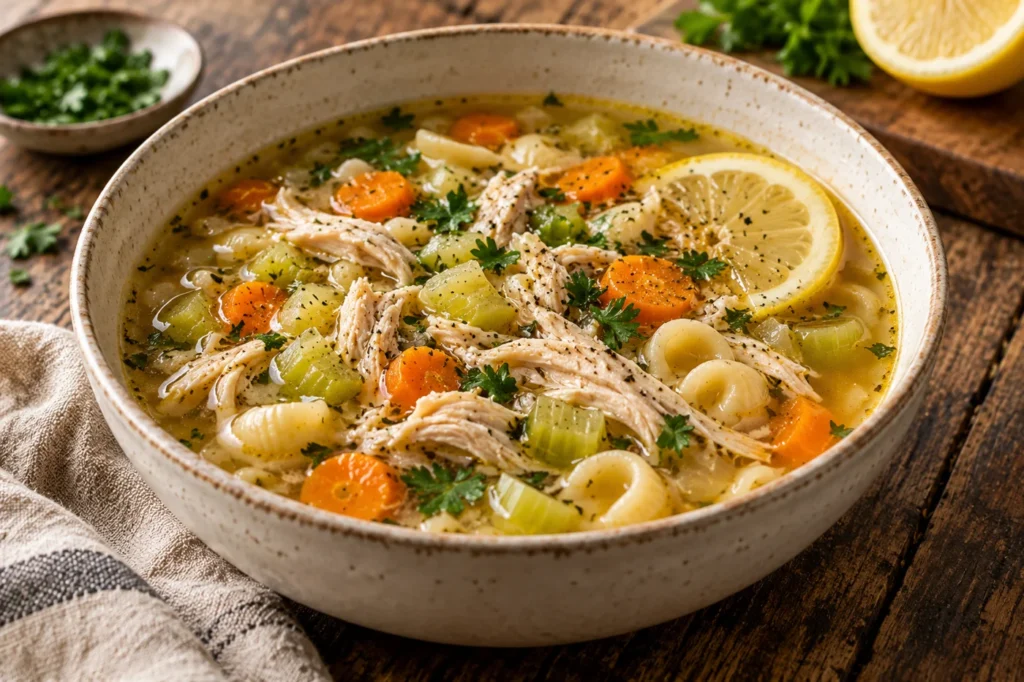
Leftover roast chicken soup turns an already cooked bird into a new meal without asking the meat to survive another long simmer. Carrot, celery and a little short pasta give this version substance, while lemon and parsley lighten the broth at the end. It is a practical four-bowl recipe for an ordinary weeknight.
Begin with chicken that was handled and refrigerated safely after the original meal. Turning leftovers into soup does not reset their storage life. If you cannot establish how long the chicken has been kept, use a fresh, safely handled batch instead. The recipe works with breast meat, thigh meat or a mixture; remove skin and bones before measuring.
Ingredients
- 2 cups shredded cooked roast chicken, about 10 ounces
- 1 tablespoon olive oil
- 1 small yellow onion, diced
- 2 medium carrots, peeled and cut into small half-moons
- 2 celery stalks, sliced thinly
- 2 garlic cloves, minced
- 6 cups low-sodium chicken broth
- 4 ounces small pasta, such as ditalini
- 1 bay leaf
- 1/2 teaspoon dried thyme
- 1 tablespoon lemon juice, plus more to taste
- 2 tablespoons chopped parsley
- 1/4 teaspoon black pepper
- Fine salt, only as needed after tasting
Method
- Heat the olive oil in a large saucepan over medium heat. Add onion, carrot and celery. Cook for 7 to 9 minutes, stirring occasionally, until the onion softens and the vegetables begin to lose their raw firmness.
- Add garlic and cook for 30 seconds. Pour in the broth, scraping the bottom gently. Add bay leaf, thyme and black pepper. Bring to a simmer, then reduce the heat and cook for 8 to 10 minutes, until the carrots are nearly tender.
- Add the pasta and simmer for the package cooking time, stirring often enough to keep it from settling. If the broth reduces too far, add a little hot water. Aim for a soup that remains comfortably brothy.
- Stir in the shredded cooked chicken during the final few minutes. Heat thoroughly, checking that reheated leftovers reach 165°F/74°C. Avoid continued hard boiling once the chicken is hot, which can make the meat stringy.
- Remove the bay leaf. Stir in the tablespoon of lemon juice and the parsley. Taste a cooled spoonful before adding salt or more lemon; roast chicken and broth can contribute more seasoning than expected.
- Ladle into warm bowls and serve. If preparing ahead, cook the pasta separately, refrigerate components promptly and add the pasta to the portions you reheat. This keeps it from absorbing most of the broth during storage.
Start with the broth you actually have
Low-sodium broth gives you the most control, but a regular carton can work if you hold back added salt. Taste it before cooking so you know how strong it is. If the broth is concentrated or unusually savory, replace part with water. Homemade stock is welcome, though it is not required for an everyday soup built around well-seasoned roast chicken.
Small pasta shapes are easy to eat with a spoon and distribute through the bowl. If using broken spaghetti, snap it over a tray rather than the pot so sharp pieces do not scatter. Keep the quantity modest: pasta continues to absorb liquid after the burner is off. Add more broth when reheating if the soup has thickened.
Give the vegetables a head start
Cooked chicken needs reheating rather than tenderizing. That is why it joins the pot near the end, after the carrots have softened and the pasta is almost ready. Slice the carrots evenly so a few thick chunks do not hold the recipe hostage. Celery can be cut slightly smaller, especially if you prefer its flavor without a distinct crunch.
The onion does not need to brown deeply. A gentle sweat brings sweetness without turning this into a dark, roasted soup. If the pan looks dry before the vegetables soften, add a spoonful of broth and lower the heat. Save deliberate browning for another dish rather than chasing it while the garlic waits nearby.
Adjustments, pairings and allergens
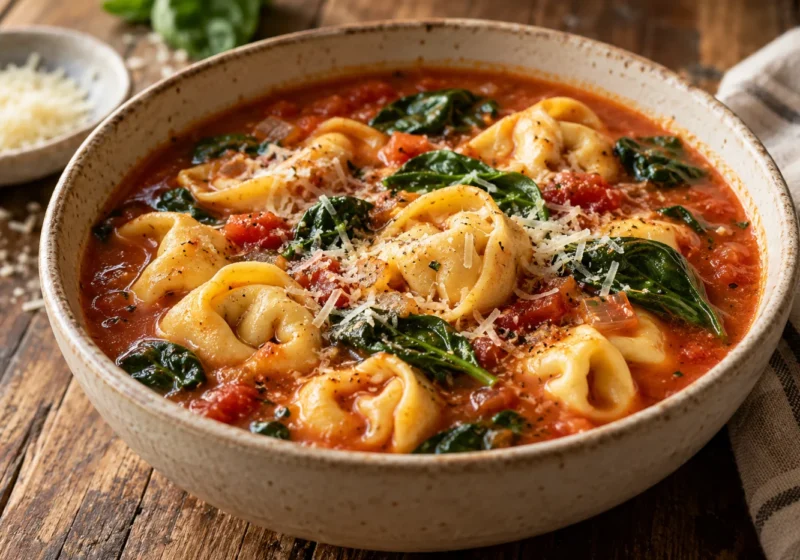
White beans can replace pasta for a different texture; use a drained, rinsed can and add it with the chicken. Frozen peas work well in the final minutes. Keep leafy greens finely sliced and add them only until wilted. For a richer, filled-pasta meal, use the separate one-pot tortellini soup recipe so the liquid balance stays appropriate.
A small roll or half a meatball hoagie makes this a more substantial shared lunch. Ordinary pasta contains wheat, and some varieties include egg. Check broth and roast-chicken seasonings for additional allergens. Lemon is there for balance, so reduce it if your chicken was already cooked with a strongly acidic marinade.
Storing the finished soup
Cool and refrigerate promptly in shallow containers. Count the chicken’s earlier refrigerated days toward the usual three-to-four-day leftover window. Freeze portions you will not use in time; pasta-free soup freezes more pleasantly. Label containers with the original chicken cooking date as well as the soup date so a later meal does not become a guessing exercise.
Frequently asked questions
Can I simmer the bones in this soup? Use a separate stock-making process if you want to extract flavor from a safely handled carcass. Loose small bones are difficult to remove from finished soup, especially once pasta and vegetables are present. This recipe starts with ready-to-use broth and boneless meat.
Why does lemon go in last? Adding it at the end makes its brightness easier to judge. Start with the measured tablespoon, stir, then taste a spoonful that has cooled slightly. A very hot spoonful can make seasoning harder to assess, and you can always add another small squeeze at the table.