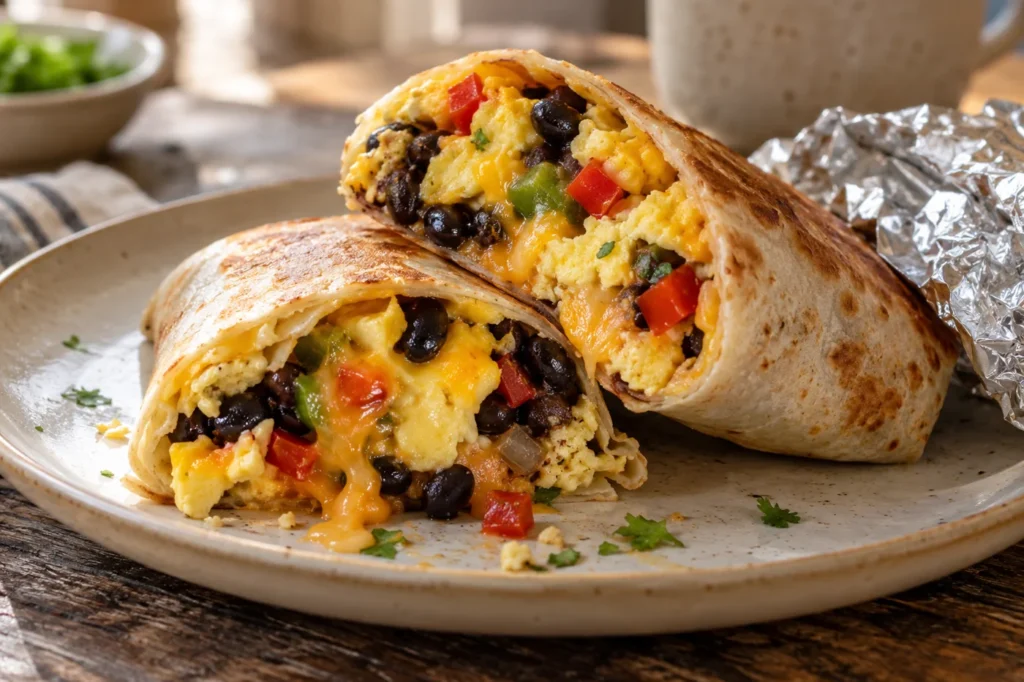
Make ahead breakfast burritos are easier to rely on when the filling is flavorful but relatively dry. This batch uses scrambled eggs, roasted potato, black beans and cheese, with salsa saved for serving. Each component has a job: eggs soften the bite, beans add substance, and small potato cubes bring a little texture.
The recipe makes six burritos from 8-inch tortillas. It deliberately avoids overfilling them, because a neat roll freezes and reheats more evenly than a tightly stretched parcel. Allow time for the cooked ingredients to cool under refrigeration before wrapping the freezer batch; do not leave a tray on the counter until you remember it.
Ingredients
- 6 flour tortillas, about 8 inches across
- 8 large eggs
- 2 tablespoons milk
- 1 medium potato, about 8 ounces, cut into 1/2-inch cubes
- 1 small red bell pepper, finely diced
- 1 tablespoon olive oil, divided
- 1 cup drained, rinsed canned black beans
- 4 ounces shredded cheddar
- 1/2 teaspoon ground cumin
- 1/2 teaspoon fine salt, divided
- 1/4 teaspoon black pepper
- Salsa, for serving separately
Method
- Heat the oven to 425°F/220°C. Toss potato cubes with 2 teaspoons olive oil, cumin and 1/4 teaspoon salt. Spread on a metal tray and roast for 20 to 25 minutes, turning once, until tender and lightly golden.
- Heat the remaining teaspoon olive oil in a skillet over medium heat. Add the diced pepper and cook for 4 to 5 minutes until softened. Stir in the drained beans for 1 minute, then transfer to a shallow container.
- Whisk eggs with milk, the remaining 1/4 teaspoon salt and black pepper. Scramble gently in the skillet over medium-low heat, folding slowly. Cook the egg mixture to 160°F/71°C, with no liquid egg remaining, then transfer to another shallow container.
- For freezer burritos, refrigerate the cooked fillings promptly in shallow containers until cool, about 40 minutes depending on depth. Warm tortillas only enough to make them flexible. Divide the potato, bean mixture, eggs and cheese evenly across their centers.
- Fold the sides over the filling, then roll from the edge nearest you, keeping the package snug without stretching. Wrap each in parchment and place in a freezer bag. Label with the date and freeze in a single layer before stacking.
- To reheat from frozen, remove packaging that is not microwave-safe. Microwave on a microwave-safe plate, turning halfway, until the center reaches 165°F/74°C; time varies by appliance and burrito size. Rest briefly, check the center, then crisp in a dry skillet if desired. Serve salsa separately.
Moisture control makes a better freezer filling
Drain the beans thoroughly after rinsing, and cook the peppers until their surface moisture has evaporated. Roasting the potatoes rather than boiling them helps keep the filling dry. These small decisions matter more than adding another layer of cheese. Water that freezes inside the burrito can soften the tortilla and create a wet patch as it reheats.
Avoid putting fresh tomato, sour cream or a generous spoonful of salsa inside the freezer version. Add those at serving time instead. If you like hot sauce, use a few drops on the filling rather than enough to pool. A thick cooked salsa can still be offered at the table, where each person controls how much moisture reaches the tortilla.
Wrap for even reheating
Place the filling in a short horizontal line, leaving clear space around all edges. Fold the sides first so the ends do not leak. Keep the cheese close to the eggs, where it can melt through the filling. If a tortilla cracks, warm the next one a little more; forcing a cold tortilla around the filling usually makes the tear worse.
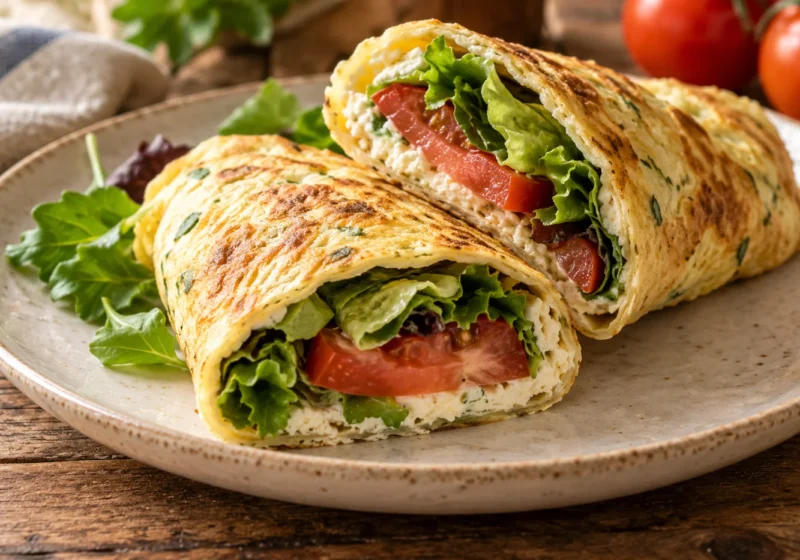
Do not solve a surplus filling problem by making the last burrito twice as thick. Use the extra in a bowl or make a seventh burrito with another tortilla. Similar sizes heat more predictably. For a fresh, unfrozen wrap on another day, cottage cheese flatbread offers a softer alternative, though it needs its own handling method.
Variations and allergen notes
Swap cheddar for Monterey Jack, or use pinto beans instead of black beans. Leftover cooked chicken can replace some beans, provided its earlier storage time is accounted for. The seasoning profile in sheet-pan chicken fajitas pairs naturally with this filling. Keep all substitutions finely cut so the burritos roll easily.
Standard flour tortillas contain wheat; eggs and cheese add egg and milk allergens. Some tortillas include other ingredients, so read their labels. A corn tortilla is usually too small and brittle for this particular rolling method. Use a suitable large wrap if changing the bread, and check its freezing guidance rather than assuming it behaves identically.
Freezer planning and storage
For best eating quality, aim to use the frozen batch within two months. Keep a few labels visible so older portions are used first. Refrigerated cooked burritos should be eaten within the usual three-to-four-day leftover period. Thaw in the refrigerator if preferred; never leave a frozen burrito on a desk or counter to thaw through a morning.
Frequently asked questions
Can I bake the frozen burritos instead? Yes, in an oven-safe dish or wrapping, but the center still needs a thermometer check. Remove parchment if its manufacturer does not permit the intended oven use. Baking takes longer than microwaving, and a light cover helps prevent the tortilla drying out before the filling heats.
Why rest after reheating? Heat continues to equalize through the filling while the outside becomes easier to handle. Resting is useful, but it does not replace reaching a safe reheating temperature. Check the thick center rather than a melted-cheese edge, which often feels hot sooner.