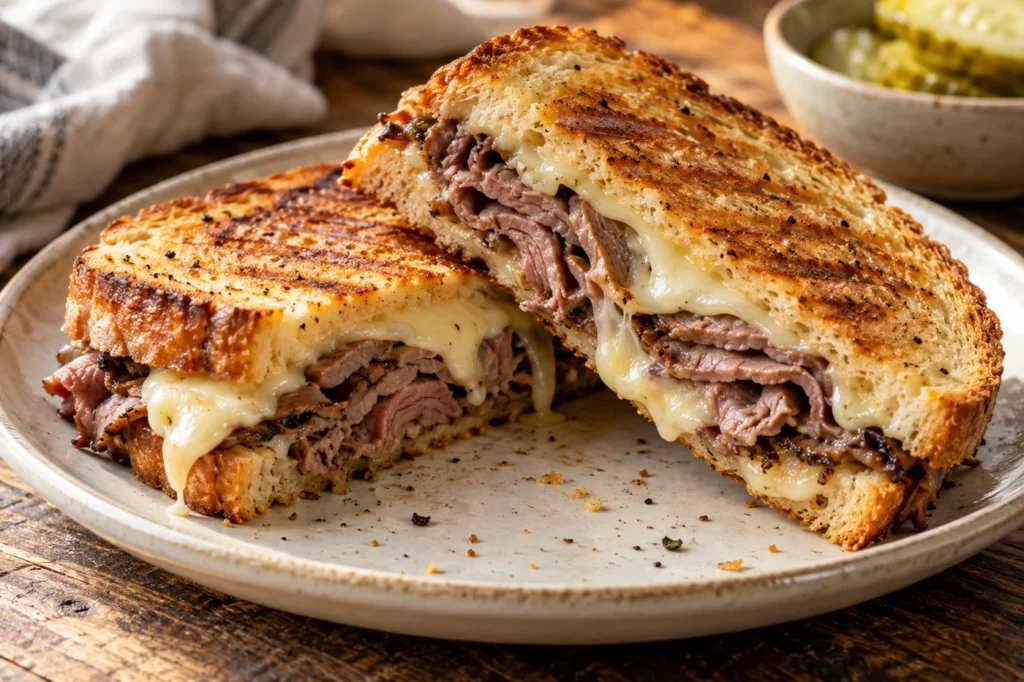
A roast beef provolone panini does not require a sandwich press. A skillet, a second small pan and steady medium-low heat give you a crisp exterior with melted cheese inside. This version adds a little Dijon mustard and softened onion, keeping the filling flavorful without making the sandwich wet or difficult to turn.
Use thin slices of cooked roast beef rather than a thick slab from a roast. Thin meat warms more evenly, folds comfortably into the bread and lets the provolone help bind the filling. The recipe makes two sandwiches and works with sturdy sourdough slices or a moderately soft Italian loaf.
Ingredients
- 4 slices sturdy sourdough or Italian bread, about 1/2 inch thick
- 6 ounces thinly sliced cooked roast beef
- 4 ounces sliced provolone
- 1 small yellow onion, thinly sliced
- 1 tablespoon olive oil
- 2 teaspoons Dijon mustard
- 1 tablespoon softened butter
- 1/4 teaspoon black pepper
- 1 tablespoon water, plus another teaspoon if needed for onions
Method
- Warm the olive oil in a skillet over medium heat. Add the onion and cook for 8 to 10 minutes, stirring frequently, until softened and lightly golden. Add the tablespoon of water if the pan becomes dry, then let that moisture evaporate.
- Transfer the onions to a bowl. Wipe the skillet and lower the heat to medium-low. Spread mustard on two bread slices. Layer half the cheese over those slices, then add roast beef, the cooked onions and black pepper.
- Add the remaining cheese above the beef and close with the other bread slices. Spread the softened butter thinly over the outsides. Keeping cheese on both sides of the filling helps the sandwich stay together as it warms.
- Place the sandwiches in the skillet without crowding. Cover with a clean small pan or a sturdy spatula and apply light pressure. Cook for 3 to 5 minutes, checking the underside early; it should become golden rather than dark brown.
- Turn carefully with a broad spatula. Apply light pressure again and cook for another 3 to 5 minutes. If the bread colors before the center warms, lower the heat and cover loosely. When using leftover roast beef, heat the filling to 165°F/74°C.
- Move the sandwiches to a board and rest for 2 minutes. Slice with a serrated knife using a gentle sawing motion. Serve immediately so steam does not soften the crust underneath.
Choose bread with the right structure
Very thick bread looks generous but can leave the center cool while the outside burns. Half-inch slices are a useful compromise. Large air holes also need attention: cheese can leak through and stick to the pan. Turn the bread so the most solid surface faces inward, or use another slice when a large hole sits directly beneath the filling.
A firm crust adds texture, but an exceptionally tough loaf can squeeze the meat out when bitten. If the bread is slightly stale, this warm sandwich is a good use for it, provided it has no mold or spoilage. Do not add water directly to the assembled sandwich; a lid and lower heat are better ways to encourage the cheese to soften.
Pressure should be gentle
A panini needs contact with the skillet, not crushing. Light pressure helps the bread brown evenly and the layers settle. A heavy weight can force out melted cheese and leave a compressed interior. Use a second pan that fits inside your skillet, and take care with its handle because it may become hot from rising heat.
Cook one sandwich at a time if your skillet is small. Crowding reduces your control when turning and can put one sandwich over a cool edge. A cast-iron pan holds heat strongly, so lower the burner sooner than you might with a light nonstick skillet. The visual goal is a uniform golden crust with small darker patches, not a hard black outline.
Balance the filling and change it sensibly
Dijon adds acidity that cuts through the beef and cheese. Use less if your roast beef is heavily seasoned. A small amount of horseradish can replace part of the mustard, but taste it first because strength varies widely. Roasted peppers are a good alternative to onions when drained thoroughly. Avoid stacking both in thick, juicy layers.
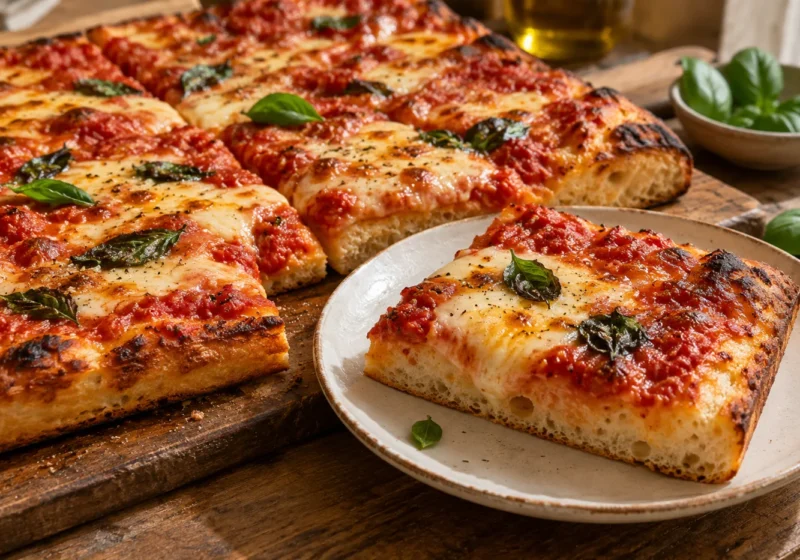
Serve with air fryer sweet potato cubes for a warm lunch. For a sharing table, pair half-sandwich portions with squares of tomato pie and a simple green salad. This sandwich contains wheat and milk, and mustard is an allergen in some labeling systems; check packaged ingredients for your needs.
Planning ahead and storing extras
Cook the onions ahead, refrigerate promptly and assemble the panini when ready to eat. Keep meat according to its package instructions and shortest use-by date. Leftover assembled sandwiches lose their crispness but can be refrigerated promptly and reheated thoroughly in a covered skillet, then uncovered briefly to restore the surface. Do not leave meat and cheese sandwiches unrefrigerated for an extended lunch break.
Frequently asked questions
Can I use a dry skillet? Yes. Butter gives a richer flavor and more even color, but a lightly oiled pan also works. Keep the heat restrained and watch the first side carefully. A nonstick skillet is especially useful if you prefer to reduce the added fat.
Why is the cheese still firm when the bread is browned? The pan was probably too hot or the filling too thick. Lower the burner, cover briefly and give the center more time. For the next sandwich, use thinner cheese slices and distribute the beef in loose folds rather than a dense central stack.