
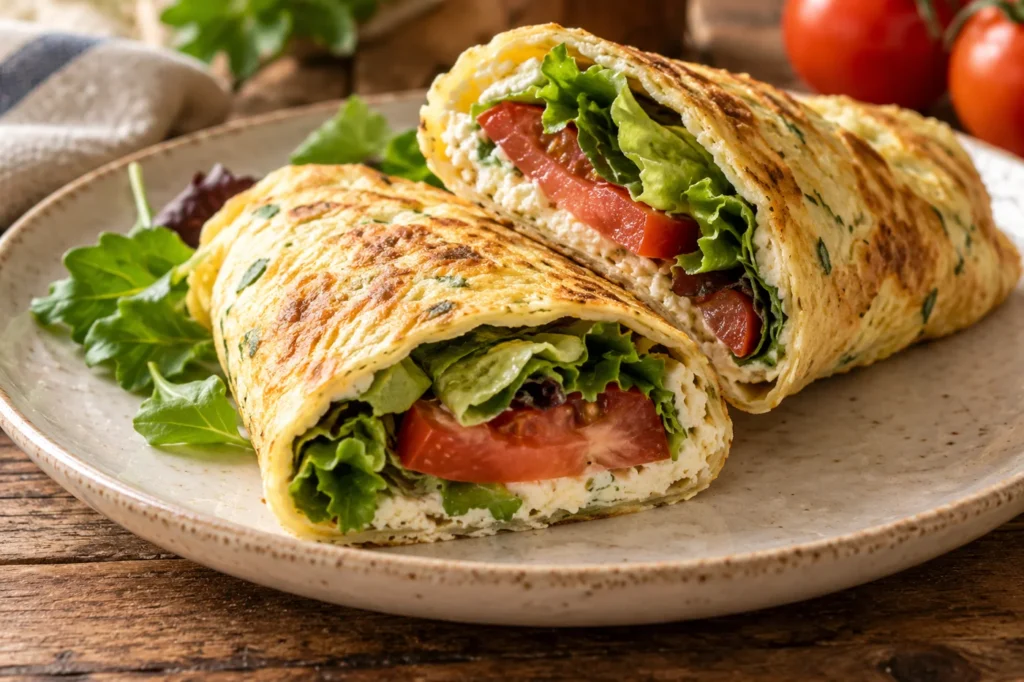
Cottage cheese flatbread is a baked egg-and-cheese sheet that can fold around a simple lunch filling. It is not a yeast bread and does not have the chew of a wheat tortilla. Think of a thin, lightly browned frittata with enough structure to lift and roll. The best result comes from blending the base smooth and spreading it evenly rather than making the edges paper-thin.
You need a blender, a small rimmed baking sheet, and dependable baking parchment. Wax paper is not a substitute. The batter contains enough moisture that it must set fully before you try to lift it. Allowing a short cooling period also helps the sheet firm up, making patience at the end as useful as careful mixing at the beginning.
What keeps the wrap flexible
Eggs provide the structure, while cottage cheese supplies moisture and a savory flavor. Do not drain all the liquid from the cheese or replace the eggs with extra cottage cheese; either change alters how the sheet sets. Full-fat cottage cheese gives a rich result, though a lower-fat version can work. Check the label before adding much salt because brands differ.
Use a baking area about 9 by 12 inches inside the rimmed sheet. A much larger rectangle produces fragile edges and a thin center. A smaller area makes the sheet thicker and more omelet-like. If your pan is larger, simply spread within the suggested rectangle and leave a border of unused parchment around it.
Ingredients
- 1 cup (225 g) cottage cheese
- 2 large eggs
- 1/2 teaspoon garlic powder
- 1/2 teaspoon dried oregano
- 1/8 teaspoon fine salt, optional
- 1/4 teaspoon ground black pepper
- 1 teaspoon olive oil, for lightly greasing the parchment
- For filling: 1 cup baby greens, 1 small sliced tomato, and 1/2 sliced cucumber
Method
- Heat the oven to 350°F/175°C. Line a rimmed baking sheet with baking parchment and brush the paper lightly with olive oil.
- Blend cottage cheese, eggs, garlic powder, oregano, optional salt, and pepper until smooth, stopping to scrape the sides once.
- Pour onto the prepared parchment and spread into an even 9-by-12-inch rectangle. Keep the edges close to the same thickness as the center.
- Bake for 25–35 minutes until the surface is set, the edges are lightly golden, and the center reaches 160°F/71°C on a food thermometer. It should not look wet or wobble like raw batter.
- Leave on the pan for 10 minutes. Loosen an edge gently, then peel the parchment away from the flatbread while supporting the sheet with your other hand.
- Cut into two portions. Add well-dried greens, tomato, and cucumber, keeping a border clear, then fold or roll gently and serve.
Releasing it without tearing
Parchment quality and cooling time make a noticeable difference. If the sheet resists lifting, do not pull harder from one corner. Slide a thin spatula underneath to loosen a wider area, then peel the paper downward while supporting the bread. A flatbread that is still steaming and very soft needs another few minutes before handling.
Wet patches in the center usually mean the batter was spread unevenly or removed too early. Return it to the oven briefly before cooling if it has not fully set. Dark, brittle edges point to a rectangle that was too thin at the perimeter. On the next batch, use a spatula to nudge the outer batter inward and level the surface before baking.
Fillings that suit the texture
Keep the filling lighter than you would in a sturdy flour wrap. Thin slices of vegetables, a little hummus, or shredded cooked chicken work well, but a large mound can split the sheet. Pat tomato and cucumber dry and keep dressing to a thin smear. The flatbread already has an egg-and-cheese flavor, so a strong additional cheese is optional rather than essential.
For a warm filling, use a few pieces of hot honey chicken after letting excess glaze drip away. For a meat-free lunch, add a spoonful of lemon herb bean salad, drained of any dressing collected at the bottom of its container. In either case, avoid packing the wrap tightly while it is hot.
Seasoning changes and allergens
A pinch of smoked paprika, dried dill, or onion powder can replace the oregano. Finely chopped fresh herbs also work in small amounts, but avoid adding a handful of watery vegetables directly to the batter. Spinach, grated zucchini, or chopped tomatoes change the moisture balance and require a different approach.
The base contains milk and egg. Although it uses no flour, that does not establish that every ingredient or kitchen surface is free from gluten or another allergen. Check the cottage cheese, spice blends, and intended fillings. Egg substitutes have different setting behavior and are not a reliable one-for-one swap for the two whole eggs in this recipe.
Storage and packing for lunch
Cool the unfilled flatbread promptly, then place parchment between portions and refrigerate in a covered container for up to 3 days. Add moist fillings shortly before eating. For a packed lunch, keep it chilled with an ice pack rather than treating it like shelf-stable bread. Gently warm an unfilled portion if you prefer, but expect repeated heating to make it firmer.
Can I use egg whites only?
Whole eggs give this version both structure and flexibility. An egg-white-only mixture may turn more rubbery and can need different quantities, so it is better approached as a separate recipe. The yolks also contribute flavor that helps balance the tang of cottage cheese.
Is this supposed to be crisp?
No. The goal is a flexible, fully cooked sheet with lightly browned edges. Baking until the entire surface is crisp makes it hard to roll. If you want a crunchy snack, a roasted potato or seed recipe will give a more suitable texture.