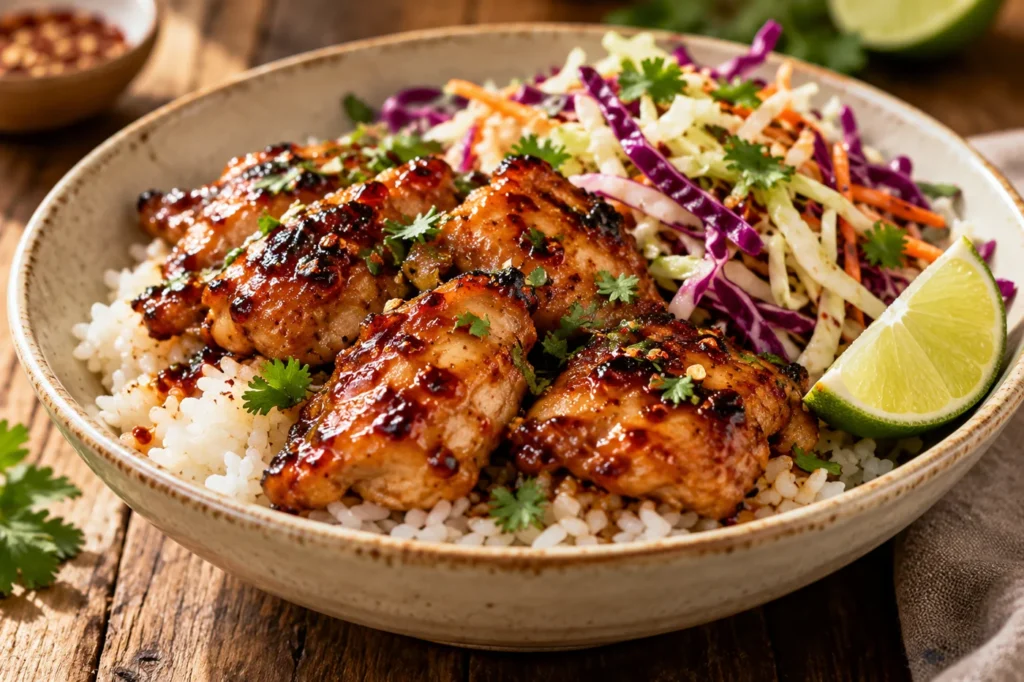
Hot honey chicken bowls work because the sweet glaze is only one part of the meal. Juicy chicken brings savory flavor, cabbage slaw adds acidity and crunch, and rice catches the sauce. Keeping those elements distinct produces a better bowl than drowning everything in honey. This version uses boneless chicken thighs, a quick skillet method, and a small batch of glaze you can make as mild or fiery as you like.
Cook the rice according to its package instructions while preparing the chicken, or use a freshly heated microwave rice pouch. The recipe below assumes you have three cups of hot cooked rice ready to serve. You can substitute another grain, but keep the serving base simple so the glaze and fresh vegetables remain the focus.
A balanced bowl starts with the slaw
Thinly slice the cabbage rather than shredding it into very fine strands. Slightly wider shreds retain more crunch once dressed. Lemon juice, oil, and salt are enough; mayonnaise would make the bowl heavier and obscure the contrast with the warm chicken. Mix the slaw just before you start cooking so it has a few minutes to soften without becoming limp.
Honey can darken quickly in a hot pan. Cook the chicken first, reduce the heat, and add the glaze only at the end. This gives the meat time to brown while keeping the sugar from scorching. Keep a small splash of water nearby to loosen the sauce if it reduces faster than expected.
Ingredients
- 1 pound (450 g) boneless, skinless chicken thighs, cut into 1-inch pieces
- 1 tablespoon olive oil, divided
- 1/2 teaspoon smoked paprika
- 1/2 teaspoon garlic powder
- 1/2 teaspoon fine salt, divided
- 1/4 teaspoon ground black pepper
- 3 tablespoons honey
- 1 tablespoon hot sauce, plus more to taste
- 1 tablespoon apple cider vinegar
- 2 tablespoons water
- 3 cups hot cooked rice
- 3 cups thinly sliced cabbage
- 1 tablespoon lemon juice
- 1 small cucumber, sliced
- 2 scallions, thinly sliced
Method
- Toss the cabbage with lemon juice, 1 teaspoon olive oil, and 1/4 teaspoon salt. Set aside while the chicken cooks. In a small bowl, stir together honey, hot sauce, vinegar, and water.
- Pat the chicken dry and season with paprika, garlic powder, remaining salt, and black pepper. Heat the remaining 2 teaspoons oil in a large skillet over medium-high heat.
- Add the chicken in a loose layer, using two batches if the pan is crowded. Cook for about 8–10 minutes, turning occasionally, until browned and the largest pieces reach 165°F/74°C on a food thermometer.
- Reduce the heat to low. Return any cooked chicken to the pan, add the honey mixture, and stir for 1–2 minutes until lightly glossy. Add a teaspoon of water if the glaze becomes sticky before it coats the meat.
- Divide the hot rice between four bowls. Add chicken, slaw, cucumber, and scallions in separate sections. Spoon over the glaze left in the pan and serve immediately.
Adjust the heat without losing flavor
Hot sauces differ dramatically, so begin with a familiar mild one. You can always drizzle extra over individual bowls. For a gentler version, replace half the hot sauce with additional vinegar and a pinch of smoked paprika. For more heat, add chili flakes to the finished glaze rather than increasing the sauce so much that it becomes overly salty or acidic.
Chicken breast can replace thigh meat, but cut it evenly and check it early. Breast has less room for overcooking, and smaller pieces may reach the safe temperature before they look deeply browned. A thermometer is more reliable than color. Avoid pouring raw chicken juices into the finished slaw or using the same unwashed board for cucumber and meat.
Serving variations
Brown rice, quinoa, or warm flatbread can stand in for white rice. If using a grain with a strong nutty flavor, keep the slaw bright and simple. A spoonful of plain yogurt can soften the chili heat, though that adds milk as an allergen. Sesame seeds are another optional topping and introduce sesame; leave them off if they are not suitable for your table.
For a meat-free meal with a similarly satisfying contrast, prepare crispy rice salad with cucumber and lime. A tray of air fryer sweet potato cubes can also replace part of the rice in these bowls, adding a soft, sweet base without extra honey.
Prep ahead without soggy vegetables
Slice the cabbage and cucumber ahead, but keep their dressing separate until shortly before eating. Mix the glaze in a small jar and refrigerate. Raw chicken should be stored separately from ready-to-eat ingredients. Cooked chicken can be packed into individual meal containers once it has been cooled promptly; keep the cold vegetables in their own compartment.
Refrigerate cooked components within 2 hours and use the chicken within 3–4 days. Reheat it to 165°F/74°C before adding fresh slaw. Rice has its own handling requirements: cool it rapidly, refrigerate promptly, and follow local food-safety guidance rather than leaving it on the counter while other ingredients are prepared. For meal prep, cooking a fresh rice portion is the simplest option.
Why is the glaze watery?
The chicken may have released moisture or the pan may be too cool. Lift the cooked chicken onto a plate and simmer the sauce briefly by itself, then return the meat. Stop while the glaze still flows; honey thickens further as it cools.
Can I make the bowls less sweet?
Use 2 tablespoons honey instead of 3 and add an extra tablespoon of water. The coating will be lighter, but the vinegar, chili, and browned chicken still give the bowl plenty of flavor.