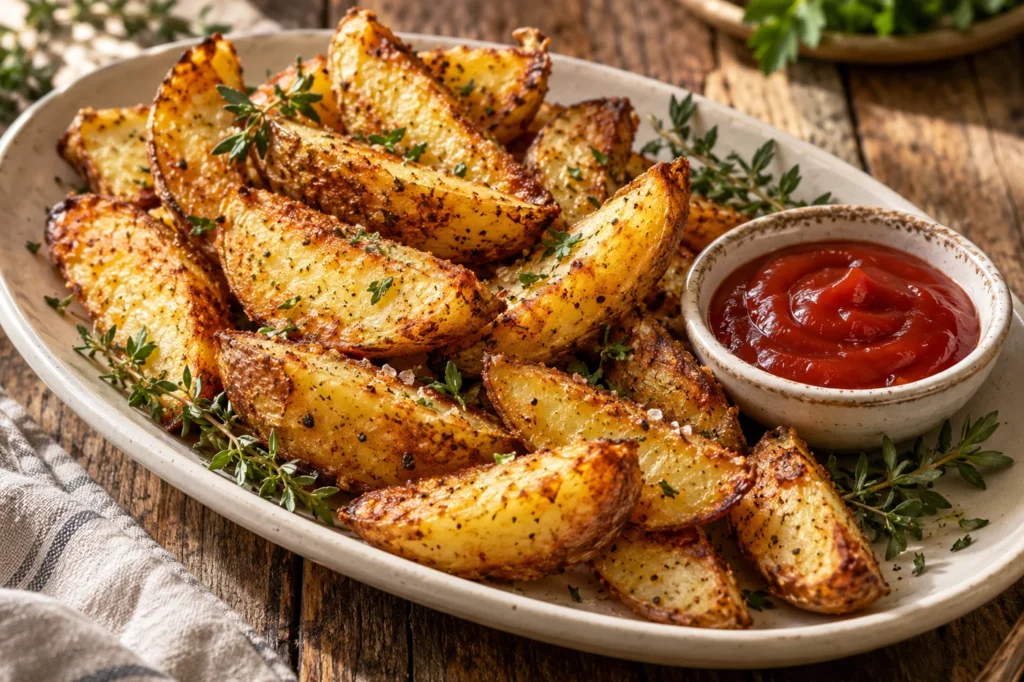
Crispy oven potato wedges need a hot pan, a dry surface and room for steam to escape. They do not need a complicated coating or a deep fryer. This recipe uses russet potatoes for their fluffy centers, olive oil for browning and a light paprika seasoning that leaves the potato flavor clear.
The method makes four side portions from two pounds of potatoes. Wedge size matters more than a perfectly uniform shape: aim for pieces with similar thickness so the thin tips do not burn while the centers remain firm. A large metal baking sheet gives better browning than a deep casserole dish.
Ingredients
- 2 pounds russet potatoes, scrubbed well
- 3 tablespoons olive oil
- 1 teaspoon sweet or smoked paprika
- 1/2 teaspoon garlic powder
- 3/4 teaspoon fine salt
- 1/4 teaspoon black pepper
- 1 tablespoon chopped parsley, optional
Method
- Heat the oven to 425°F/220°C with a rack in the lower-middle position. Place a large bare metal baking sheet in the oven while preparing the potatoes. Use two trays if one cannot hold the wedges with gaps between them.
- Cut each potato lengthwise in half, then cut each half into three or four wedges depending on its size. Keep the thickest part around 3/4 inch. Rinse briefly in cold water to remove loose surface starch, then dry thoroughly with clean towels.
- Mix olive oil, paprika, garlic powder, salt and pepper in a large bowl. Add the dried wedges and turn until all sides have a thin, even coating. Scrape the seasoning from the bowl over any bare-looking pieces.
- Carefully remove the hot tray with oven mitts. Arrange the wedges on a cut side with space between pieces. Roast for 20 minutes without moving them, then use a thin spatula to turn each wedge onto its other cut side.
- Roast another 15 to 25 minutes, until deeply golden on the cut surfaces and tender in the thickest part. A fork should enter easily. If one tray browns faster, rotate it; if using two trays, swap their positions halfway through.
- Let the wedges stand on the tray for 5 minutes so the surfaces firm slightly. Add optional parsley and taste before adding more salt. Serve promptly rather than covering the hot wedges, which traps steam and softens the crust.
Pick potatoes for the texture you want
Russets give a fluffy interior and rough edges that brown well. Yukon Gold potatoes make a creamier wedge with a somewhat smoother surface. Both are useful, but small waxy salad potatoes behave differently and may stay firmer. Choose potatoes of roughly similar size, and cut away damaged areas; discard potatoes with extensive greening, decay or a bitter taste.
Leaving the skins on adds structure and saves preparation time. Scrub them well under running water before cutting. If peeling is your preference, the same cooking approach works, though the wedges can be more fragile when turning. Keep the pieces in wedges rather than converting some to thin fries, because mixed shapes finish at noticeably different speeds.
Drying and spacing are the main tricks
The quick rinse removes loose starch, but the drying step must follow it. Oil slides off a wet potato surface and leaves water to evaporate before browning can begin. Use a second towel if the first becomes saturated. A lengthy soak is not necessary for this recipe, and it adds another opportunity to leave the potatoes wet.
Crowding is the other common reason wedges disappoint. Every piece needs contact with hot metal and a little open air around it. Two trays are better than one crowded tray, even if the overall cooking time becomes slightly longer. Resist stirring repeatedly; a wedge develops color where it sits against the pan, and moving it constantly interrupts that contact.
Seasoning, serving and substitutions
Garlic powder is useful here because fresh minced garlic can burn over a long roast. Add fresh herbs after cooking instead of coating the potatoes heavily before they enter the oven. Smoked paprika brings a deeper flavor; sweet paprika keeps things milder. If the seasoning turns dark too quickly in your oven, lower the heat slightly and finish by tenderness.
For another crisp-edged vegetable side, try air fryer sweet potato cubes. These wedges also fit alongside an Italian zep-inspired sandwich, where a sharp tomato-and-onion filling balances their richness. The listed ingredients contain no wheat, milk or egg, but check spice labels and shared preparation surfaces if allergens matter.
Storage and the best way to reheat
Refrigerate leftovers promptly in a shallow container and use within three to four days. Reheat leftovers to 165°F/74°C. For a crisp exterior, spread them on a hot metal tray rather than piling them in a bowl. A microwave heats quickly but softens the surface, so follow it with a brief oven or skillet finish if texture matters.
Frequently asked questions
Do I need to parboil the wedges? Not for this method. Even cutting and a sufficiently long roast cook the centers. Parboiling is a different technique that can produce rougher edges, but it introduces extra moisture and another handling step. Follow one complete approach before combining techniques.
Why are the wedges sticking when I turn them? They may not have developed a crust yet, or the pan may have been too cool. Give them a few more minutes, then slide a thin spatula underneath rather than tearing upward. Check that every piece was lightly coated with oil, especially along the cut surfaces.