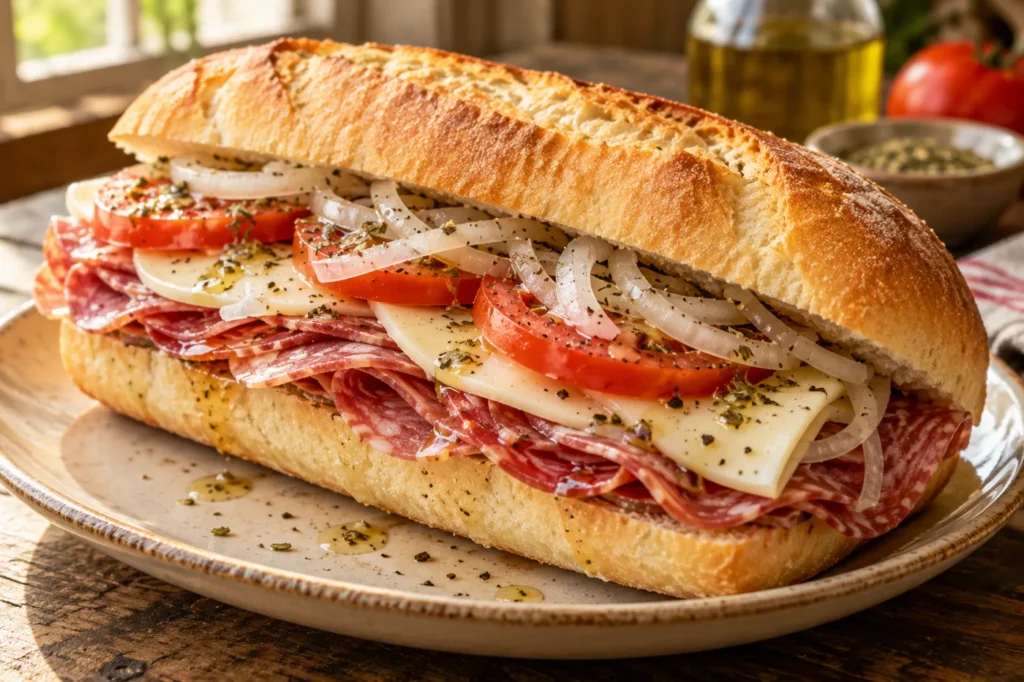
An Italian zep sandwich belongs to the generous family of deli sandwiches built around good bread, sliced meat, cheese, tomato and onion. This home version uses salami and provolone with a sharp oregano dressing. It is straightforward, substantial and designed to taste like a composed sandwich rather than a pile of competing toppings.
The July 2024 archived New Haven Cafe website listed Italian zeps among its deli favorites. This recipe takes that menu idea as inspiration; it is an independently developed preparation, not a recovered café recipe. Bread sizes and fillings vary between delis, so use the quantities here as a clear starting point for two home lunches.
Ingredients
- 2 sturdy sandwich rolls, about 8 inches each
- 6 ounces thinly sliced salami
- 4 ounces sliced provolone
- 1 large ripe tomato, sliced about 1/4 inch thick
- 1/2 small red onion, very thinly sliced
- 2 tablespoons extra-virgin olive oil
- 1 tablespoon red wine vinegar
- 1/2 teaspoon dried oregano
- 1/4 teaspoon freshly ground black pepper
- 1 small pinch salt, optional
Method
- Whisk the olive oil, red wine vinegar, oregano and black pepper in a small bowl. Taste before adding the optional salt; the meat and cheese already provide plenty of seasoning. Let the dressing stand while preparing the remaining ingredients.
- Slice the rolls lengthwise, keeping one long edge attached if possible. Pull out only a little loose bread from an especially thick top half. Leave enough crumb to absorb a light dressing without making the roll fragile.
- Spread the tomato slices on a plate and blot their cut surfaces with a clean towel. Separate the onion into thin strands. For a milder flavor, rinse the onion briefly in cold water and dry it thoroughly.
- Layer the salami loosely across the bottom of each roll, then add provolone. Overlap the slices so every bite contains both fillings rather than leaving a thick stack in the middle.
- Add the tomato and onion. Spoon about half the dressing over each sandwich, concentrating it on the vegetables. Close the rolls and press gently for a few seconds to settle the layers.
- Cut the sandwiches across the middle with a serrated knife and serve immediately. If transporting, wrap firmly in parchment, keep chilled and add the dressing shortly before eating for the best bread texture.
Choose a roll that supports the filling
A roll with a thin, slightly chewy crust makes this sandwich easier to bite through than a very hard baguette. The crumb should feel springy rather than cottony. A very soft supermarket roll can still work, but use less dressing and serve it promptly. Avoid flattening the roll with a heavy weight: gentle pressure holds the filling together without turning the bread dense.
Bread also controls the balance of salt and acid. A broad roll can take the full amount of filling, while a narrow one may need a few slices held back. Let the tomato reach across the bread rather than building a tall mound in one spot. This spreads its moisture and sweetness evenly, so the salami does not dominate the first bite.
Adjust the onion and dressing
Red onion provides a crisp, sharp contrast to the rich cheese. Slice it across the grain as thinly as possible; thick rings are harder to bite through and tend to pull out the rest of the filling. If using a particularly strong onion, the quick rinse in the method takes off some harshness without adding another flavor.
Dried oregano belongs in the dressing rather than scattered over dry bread. A few minutes in oil and vinegar helps distribute it. Do not add extra vinegar automatically: taste a small piece of tomato with a drop of dressing first. A tart tomato needs less acid than a sweet one. For a different lunch pairing, serve small portions of lemon herb dense bean salad alongside.
Substitutions and allergens
Use mild provolone for a softer flavor or aged provolone for more bite. Roasted peppers can replace tomato when fresh tomatoes taste watery, but drain them well. For a vegetarian adaptation, replace salami with grilled, cooled eggplant and increase the cheese slightly. Standard rolls contain wheat, and provolone contains milk; check deli labels for additional allergens and cross-contact information.
Make-ahead and storage
Keep prepared components refrigerated and assemble near serving time. For a packed lunch, store dressing separately and place cheese between the bread and juicy vegetables. Refrigerate perishables promptly and keep chilled during transport. An assembled sandwich is best the same day; its bread softens as the filling rests. Follow the shortest use-by instruction on your deli products.
Frequently asked questions
Should the sandwich be toasted? This version is served cold so the onion and tomato stay crisp. You can warm the empty roll briefly, but let it cool before adding the cold filling. Toasting the entire assembled sandwich changes the texture and can make the tomato release more liquid.
Can homemade bread work? Yes. A relatively flat portion of small-batch focaccia makes a different but useful sandwich base. Slice it horizontally and keep the filling layer modest. Because focaccia already contains olive oil, start with a smaller spoonful of dressing and add more only if needed.