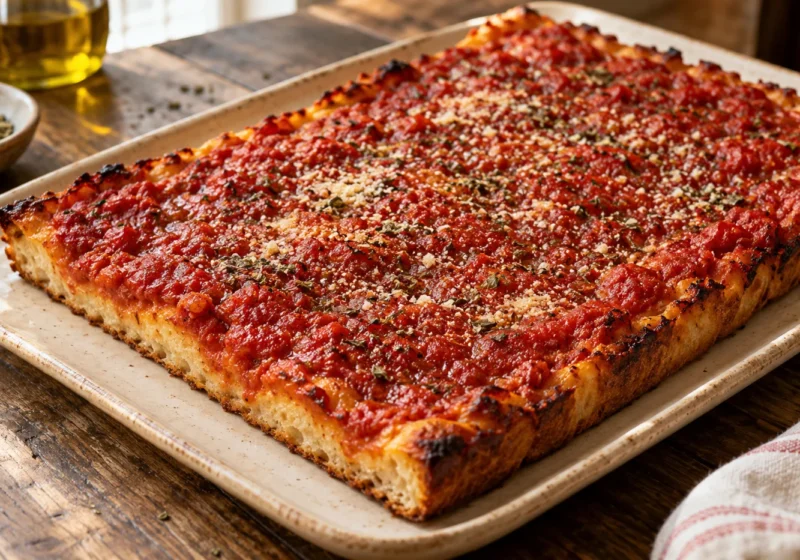
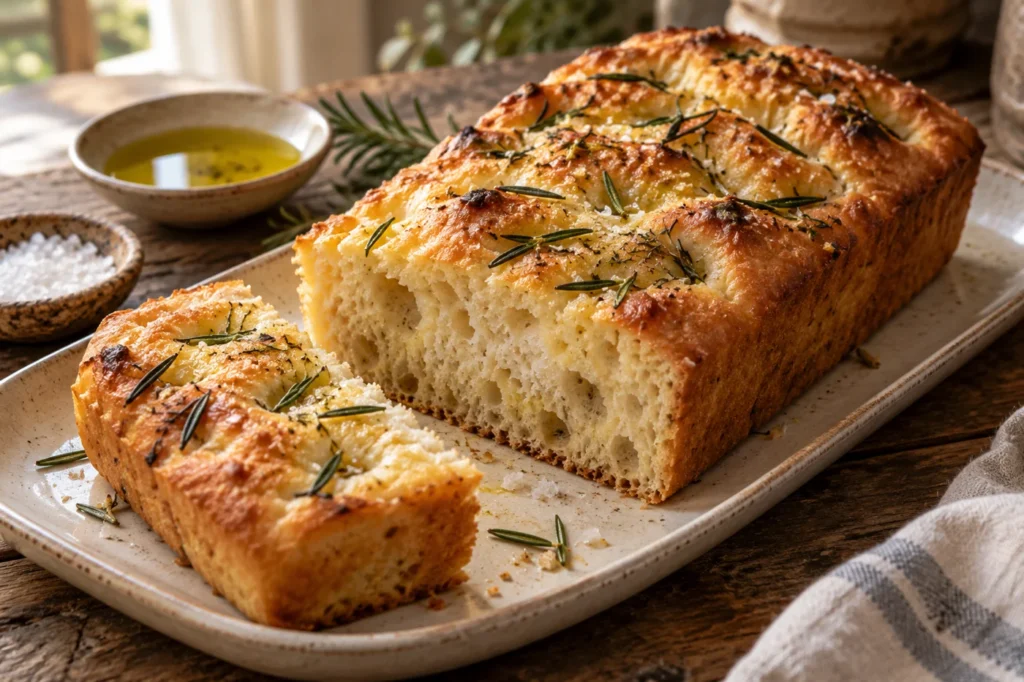
Small batch focaccia is useful when you want fresh bread without a full sheet pan of leftovers. This version bakes in a metal loaf pan, making a thick rectangle with golden sides, an olive-oil base, and a tender interior. The dough is wet and sticky by design; it needs gentle folds rather than a long kneading session.
Plan for roughly four hours from mixing to slicing, mostly waiting for dough to rise. Room temperature changes the schedule, so follow the dough’s appearance as well as the clock. Rushing a dense, under-risen dough into the oven usually produces a disappointing loaf.
A scale makes this easier
The dough uses 150 grams of water for 200 grams of flour, a relatively wet mixture that helps create an airy crumb. Measuring by weight makes that balance repeatable. A little extra flour can make the dough feel easier to handle but also tightens the finished bread. Damp or oiled hands are more useful than repeatedly dusting in flour.
Instant yeast goes directly into the dry ingredients. Check that it is within its best-before period and has been stored as the package recommends. Use lukewarm water, not hot water. The loaf does not need a heated proofing chamber; a comfortable spot away from drafts is enough. Avoid setting the bowl on a hot radiator or in an oven that may accidentally be turned on.
Ingredients
- 200 grams bread flour, plus a little for handling
- 150 grams lukewarm water
- 2 grams instant yeast (about 1/2 teaspoon)
- 4 grams fine salt (about 3/4 teaspoon)
- 1 tablespoon olive oil, for the dough
- 1 tablespoon olive oil, for the loaf pan
- 1 tablespoon olive oil, for the topping
- 1/2 teaspoon chopped fresh rosemary
- 1/4 teaspoon flaky salt, for the topping
Method
- Mix the flour, yeast, and fine salt in a medium bowl. Add the water and 1 tablespoon olive oil, stirring until no dry flour remains. Cover and rest for 20 minutes.
- With damp hands, lift one side of the dough and fold it over itself. Rotate the bowl and repeat three more times. Cover and let rise in a comfortably warm place for about 90 minutes, until noticeably expanded and airy.
- Coat an 8 1/2-by-4 1/2-inch metal loaf pan with 1 tablespoon olive oil. Transfer the dough to the pan and gently stretch it toward the corners. If it springs back, wait 10 minutes and try again.
- Cover loosely and let rise for about 60 minutes, until puffy. During the final 20 minutes, heat the oven to 425°F (220°C).
- Drizzle the dough with the final tablespoon of oil. Press oiled fingertips into it to make deep dimples, then sprinkle with rosemary and flaky salt.
- Bake for 22 to 25 minutes, until the top is golden and the edges pull slightly from the pan. Lift out carefully and cool on a rack for 20 minutes before slicing.
Read the dough, then dimple gently
After the first rise, the dough should look expanded, relaxed, and dotted with small bubbles. It does not need to stand like a firm bread dough. Transfer it with a flexible spatula, keeping as much air as practical. If it resists stretching into the pan corners, give it a short rest instead of pulling hard enough to tear it.
The final rise is important because moving the dough into the pan knocks out some gas. Wait for a puffy surface before dimpling. Oil your fingertips and press confidently toward the base, spacing the dimples over the surface. You are making little pockets for oil, not flattening the entire loaf. Add rosemary sparingly so its strong flavor does not dominate every bite.
A metal pan gives better side and bottom color than a thick ceramic dish. Pan dimensions matter too: a much larger pan makes a thinner loaf that bakes faster. Begin checking at 22 minutes. If the top browns before the sides look ready, cover loosely with foil and continue briefly, watching the bread rather than relying on a fixed extra time.
Ways to use a small loaf
Cut thick strips for dipping into creamy tomato butter beans, or serve wedges beside one-pot tortellini soup. The loaf also makes two substantial sandwiches when split horizontally. Let it cool first; cutting hot bread compresses the crumb and releases moisture that is still settling inside.
Keep toppings light for this first version. A few thin onion slices or halved cherry tomatoes can work, but a heavy layer of wet vegetables weighs down the surface. Press additions gently into the dough before baking. This bread contains wheat. Olive oil, rosemary, and salt keep the ingredient list simple, but check toppings and packaged flour if allergies are relevant.
Storage and restoring the crust
Enjoy the bread on the day it is baked for the crispest edges. For short storage, cool completely and wrap well; toast slices the next day to refresh them. For longer storage, freeze cooled portions in a sealed freezer bag, separating slices if useful. Reheat from frozen in a moderate oven until the center is warm and the exterior crisp.
Can I refrigerate the dough overnight?
Yes. After the fold, cover and refrigerate the dough overnight instead of completing the first room-temperature rise. Transfer it to the oiled pan the next day and allow ample time to warm and become puffy before dimpling. The final proof may take considerably longer than an hour, so this variation suits a flexible morning better than a tightly timed meal.
Why is my focaccia dense?
Common causes are old yeast, too much added flour, or insufficient rising time. Check whether the dough actually expanded before baking. A cold room can make the listed schedule unrealistic, while a hot proofing spot can over-ferment the dough. Keep brief notes on your room conditions and pan size so the next small loaf is easier to judge.