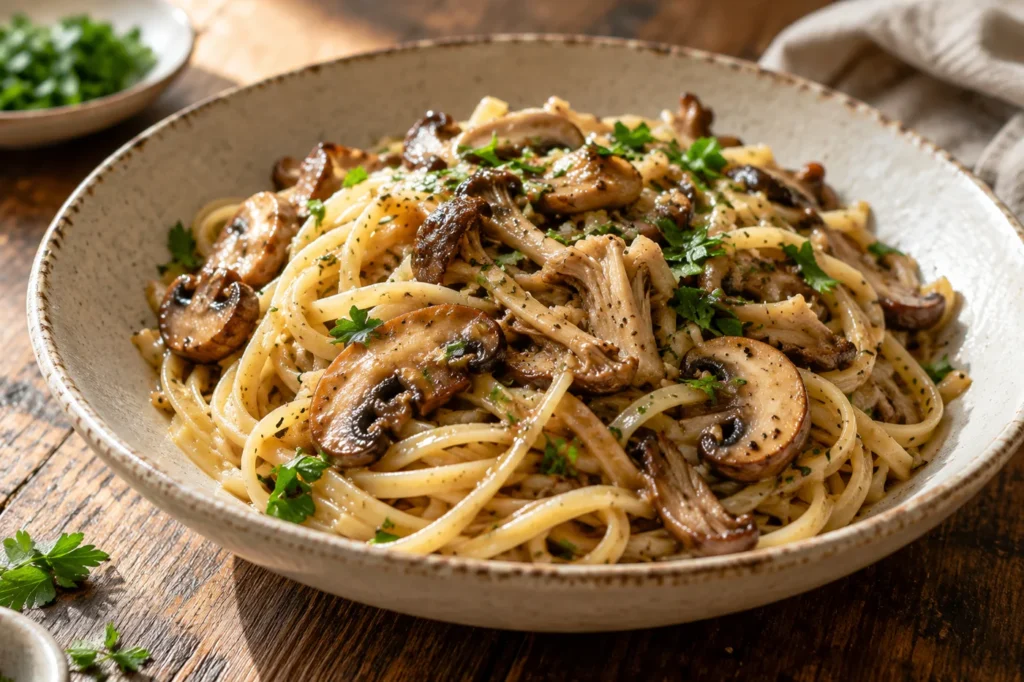
Mushroom miso pasta gets its creamy feel from starchy pasta water and olive oil rather than cream. Browned mushrooms bring savoriness, and white miso rounds out the sauce. The finished dish should look glossy, with enough liquid to coat the pasta but no puddle at the bottom of the bowl.
The recipe serves two as a generous main dish. It asks for a little attention at the stove, but the pasta and mushrooms cook at the same time, so dinner comes together quickly. Have a mug ready for the pasta water before draining; that liquid is an ingredient, not something to remember after it has gone down the sink.
Choose mushrooms for flavor and texture
Cremini mushrooms are an easy choice because they brown well and have a rounded flavor. Button mushrooms also work, and a small amount of sliced shiitake adds a firmer bite. Trim dry stem ends and brush away grit, or rinse briefly and dry thoroughly. Mushrooms carrying a lot of surface water take longer to brown in the pan.
Slice the mushrooms thick enough to keep some texture. Very thin slices shrink quickly and can become leathery. Cooking in two batches gives their released moisture room to evaporate. Let them sit for a minute between stirs so they make contact with the hot metal; constantly moving them around can leave them pale.
Ingredients
- 8 ounces dried pasta, such as spaghetti or rigatoni
- 12 ounces mushrooms, sliced
- 2 tablespoons olive oil, divided
- 1 small shallot, finely chopped
- 2 garlic cloves, minced
- 1 1/2 tablespoons white miso
- 1 tablespoon hot pasta cooking water, for the miso
- 3/4 cup reserved pasta cooking water, plus more as needed
- 1 teaspoon lemon juice
- 1/4 teaspoon black pepper
- 2 tablespoons chopped parsley
- Salt, for the pasta water and to taste
Method
- Bring a large pot of water to a boil and salt it lightly. Cook the pasta according to its package until just al dente. Before draining, reserve at least 1 cup of the starchy cooking water.
- Meanwhile, heat 1 tablespoon olive oil in a wide skillet over medium-high heat. Add half the mushrooms in a loose layer and cook for 4 to 5 minutes, stirring only occasionally, until browned. Transfer to a plate. Repeat with the remaining oil and mushrooms.
- Return all mushrooms to the skillet. Reduce the heat to medium, add the shallot, and cook for 2 minutes. Add the garlic and stir for 30 seconds.
- Whisk the miso with 1 tablespoon hot pasta water in a small bowl until smooth. Add the drained pasta and 1/2 cup reserved pasta water to the skillet and toss over low heat for 1 minute.
- Remove from the heat. Add the miso mixture, lemon juice, pepper, and parsley. Toss vigorously, adding the remaining 1/4 cup pasta water a little at a time until glossy. Taste before adding salt and serve immediately.
Make a sauce that clings
The pasta water should be cloudy with starch. Use a sensible amount of boiling water for the pasta rather than an enormous pot filled to the brim; this helps keep the reserved liquid useful for sauce-making. Salt lightly because miso supplies additional salt later. You can correct the seasoning at the end, but removing excess salt is much harder.
Dissolve the miso separately before adding it. Thick paste dropped straight into a pan tends to hide in salty little lumps. Taking the skillet off the heat for the final toss protects the more delicate flavor and gives you time to adjust the texture. Add water gradually, tossing between additions, until the pasta slides easily around the pan.
If the sauce looks watery, return the skillet to low heat briefly and keep tossing. If it looks sticky, add another spoonful of pasta water. Pasta continues absorbing liquid after it leaves the pot, so make the sauce slightly looser than you think necessary. A plate warmed with hot tap water helps keep it pleasant during serving.
Useful swaps and additions
White miso is mellow, but brands differ. Start with a little less if your paste tastes especially salty, then add more after tasting the finished sauce. A darker miso can be used sparingly for a stronger flavor. This recipe contains soy, and both pasta and some miso products may contain wheat or barley. Check the labels rather than assuming the dish suits a particular allergy.
Spinach can be folded into the hot pasta near the end, and frozen peas can be added to the pasta pot for its final minute. Keep additions modest so the mushrooms remain the focus. For another quick savory dinner, try peanut butter ramen. A bowl of lemon herb dense bean salad makes a fresh side for this pasta.
Storage and reheating
The sauce is best immediately, when it is glossy and loose. Refrigerate leftovers promptly in a shallow covered container and use within three to four days. Reheat with a splash of water in a covered skillet, stirring gently until the food reaches 165°F (74°C). Expect the pasta to be softer and the sauce less silky than the first night.
Can I add Parmesan?
Yes, if you enjoy it, but taste first because miso already supplies salt and savoriness. Finely grate a small amount over individual bowls rather than adding a large handful to the whole pan. Parmesan also adds milk as an allergen. The recipe works without it, so serve cheese separately when preferences at the table differ.
Why do the mushrooms taste bland?
They may have steamed in a crowded pan or not cooked long enough after releasing their moisture. Look for browned surfaces before adding the shallot. A small finishing squeeze of lemon also wakes up the flavor, but add it gradually; the dish should taste savory and balanced, not sharply acidic. More miso is not always the answer to a flat sauce.