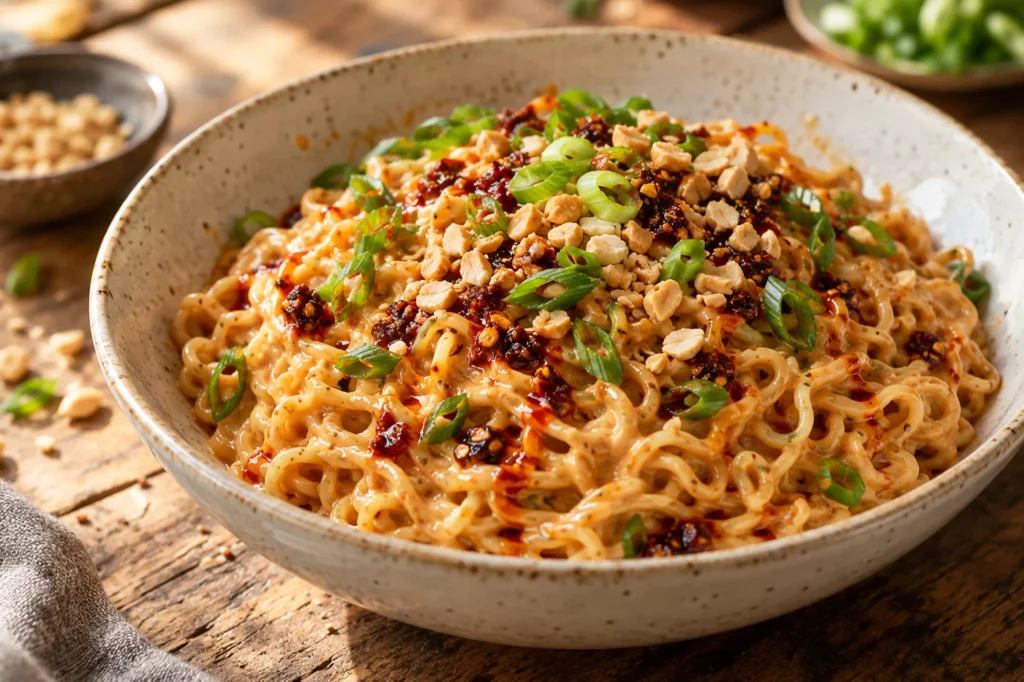
Peanut butter ramen is a quick pantry meal that feels more considered than the ingredient list suggests. Peanut butter provides body, soy sauce supplies salt, and lime keeps the sauce from tasting heavy. A little warm noodle water brings those ingredients together into a coating that clings to the strands. The trick is to make the sauce smooth before the noodles arrive.
This version uses plain instant ramen noodles without their seasoning packet. The packet would make the finished dish much saltier and can compete with the peanut flavor. You need only a saucepan, a mixing bowl, and about fifteen minutes. Shredded carrot and scallions add color and freshness, while a modest splash of chili sauce lets each person control the heat.
Choose the right peanut butter
Smooth peanut butter is easiest to whisk into a silky sauce. Natural peanut butter works well if you stir the jar thoroughly first; a dry layer from the bottom can be difficult to loosen. Sweetened peanut butter also works, but omit the brown sugar at first and taste before adding it. Crunchy peanut butter creates a more textured sauce rather than a smooth one.
Warm water loosens the fat and helps the sauce spread. Add it gradually, because a sauce that looks very thick in the bowl can suddenly become thin after another tablespoon. The noodles will contribute a little moisture too. Keep some cooking water in reserve instead of draining every drop and then reaching for cold tap water.
Ingredients
- 2 packages plain instant ramen noodles, about 140 g total, seasoning packets omitted
- 3 tablespoons smooth peanut butter
- 1 tablespoon low-sodium soy sauce
- 1 tablespoon fresh lime juice
- 1 teaspoon brown sugar, optional
- 1 teaspoon chili garlic sauce, or to taste
- 1 teaspoon toasted sesame oil
- 3–5 tablespoons warm noodle cooking water
- 1 small carrot, finely shredded
- 2 scallions, thinly sliced
- 1 tablespoon chopped roasted peanuts, for serving
Method
- Bring a saucepan of water to a boil. Meanwhile, whisk peanut butter, soy sauce, lime juice, optional sugar, chili garlic sauce, and sesame oil in a large heatproof bowl.
- Cook the ramen according to its package directions, stopping when the strands are tender but still springy. Before draining, carefully reserve at least 1/2 cup of the hot cooking water.
- Whisk 3 tablespoons warm cooking water into the peanut mixture, adding it a tablespoon at a time until the sauce is smooth and spreadable.
- Drain the noodles and immediately add them to the sauce with the shredded carrot and half the scallions. Toss thoroughly with tongs, adding up to 2 more tablespoons cooking water if needed.
- Taste a strand and adjust with a little lime juice or chili sauce. Divide between two bowls and finish with the remaining scallions and chopped peanuts. Serve straight away.
How the sauce should look
Aim for a sauce slightly looser than you want on the plate. Hot noodles absorb liquid as they sit, and peanut butter thickens as it cools. If the mixture forms a paste around the tongs, add warm water in small splashes and keep tossing. If it pools underneath the noodles, give everything a minute to settle before adding more peanut butter.
A separated-looking sauce often needs more whisking and a little warm water. Peanut butter can tighten when an acidic ingredient first hits it, but that does not mean it is ruined. Work in water gradually until the mixture becomes glossy. Avoid boiling the sauce aggressively in the pan, which makes it harder to judge consistency and can leave a scorched flavor.
Add vegetables without diluting dinner
Finely shredded carrot can go in raw because its crunch is part of the dish. Broccoli, sliced peppers, or frozen peas should be cooked first and drained well. Wet vegetables release water directly into the sauce, so shake off excess moisture before tossing them with the noodles. Start with about a cup of prepared vegetables for two servings.
For another fast dinner with a savory sauce, try mushroom miso pasta without cream. If you prefer a fresh, make-ahead meal instead of hot noodles, lemon herb dense bean salad uses a bright dressing and sturdy ingredients that hold their texture in the refrigerator.
Substitutions and allergens
Sunflower seed butter may replace peanut butter, but its flavor is earthier and it can need a little more lime. This substitution alone does not make the recipe suitable for a peanut allergy: check every product and the preparation environment. The standard recipe contains peanuts, wheat, soy, and sesame; some noodle brands also contain egg.
Rice noodles can stand in for ramen if you follow their package instructions and toss gently to avoid breaking them. Tamari is an option in place of soy sauce, but check its label if gluten is a concern. A neutral oil can replace sesame oil when you want a less toasted finish. Do not increase the sugar before balancing salt and acid.
Leftovers and serving temperature
This meal is best immediately, while the sauce is fluid. Refrigerate any leftovers promptly in a covered container and use within 2 days for the best texture. Reheat thoroughly with a splash of water, stirring gently to loosen the sauce. Cold leftovers are denser and may need extra lime and water if you prefer to eat them as a chilled noodle bowl.
Can I use the ramen seasoning packet?
It is better to leave it out here. The soy sauce and chili sauce already season the dish, and packet formulations vary. If you want a brothier ramen instead, choose a recipe designed for that balance rather than adding a full packet to this concentrated sauce.
Why does my sauce taste too rich?
Try a little more lime and warm water before adding extra salt. Acidity brightens the peanuts, while thinning the coating lets the noodles taste distinct rather than covered in a thick layer of paste.