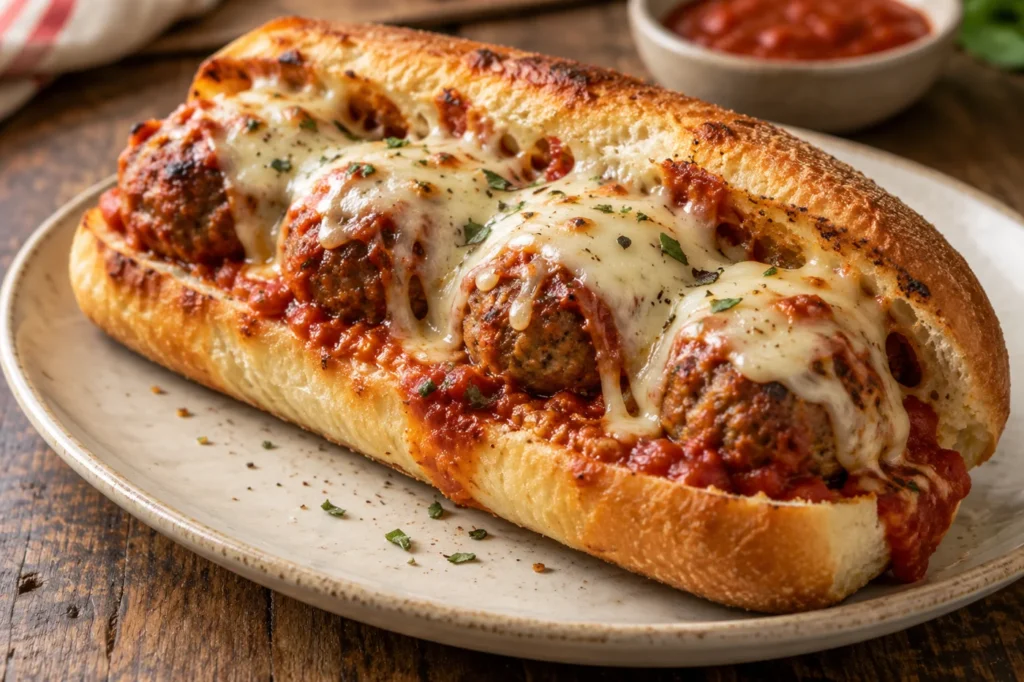
Meatball hoagies are most satisfying when the filling is tender, the sauce clings and the roll still has enough structure to lift. This recipe cooks small beef meatballs in a quick tomato sauce, then finishes the sandwiches under the broiler just long enough to melt provolone. It makes four substantial portions.
Meatball sandwiches appeared on the archived New Haven Cafe site. The version here is independently developed for a home kitchen, with measured ingredients and a clear thermometer endpoint. It uses a milk-and-breadcrumb mixture to soften the meatballs and a wide pan to reduce the sauce without a long simmer.
Ingredients
- 1 pound ground beef, about 85 percent lean
- 1/2 cup plain dried breadcrumbs
- 1/3 cup milk
- 1 large egg
- 1/4 cup finely grated Parmesan
- 2 garlic cloves, minced and divided
- 2 tablespoons chopped parsley
- 3/4 teaspoon fine salt, divided
- 1/4 teaspoon black pepper
- 1 tablespoon olive oil
- 1 can crushed tomatoes, 28 ounces
- 1/2 teaspoon dried oregano
- 4 sturdy hoagie rolls, about 6 inches each
- 4 ounces sliced provolone
Method
- Mix the breadcrumbs and milk in a bowl and let stand for 5 minutes. Add the egg, Parmesan, half the garlic, parsley, 1/2 teaspoon salt and pepper. Stir these ingredients together before adding beef so the meat needs less handling.
- Add the beef and gently combine with a fork or your hands just until evenly mixed. Divide into 16 meatballs, about 1 1/2 inches wide. Set them on a clean plate while starting the sauce.
- Heat the olive oil in a wide, deep skillet over medium heat. Add the remaining garlic and cook for 30 seconds without browning. Add crushed tomatoes, oregano and the remaining 1/4 teaspoon salt. Bring to a gentle simmer.
- Nestle the meatballs into the sauce in one layer. Cover and simmer gently for 15 minutes, then turn carefully and continue cooking for 5 to 10 minutes. Check several meatballs with a thermometer; ground beef must reach 160°F/71°C.
- If the sauce looks watery, lift the cooked meatballs onto a clean plate and simmer the sauce uncovered for a few minutes. Return the meatballs and coat them. Meanwhile, split the rolls and toast their cut surfaces lightly under the broiler.
- Place four meatballs in each roll with a modest spoonful of sauce. Add provolone, arrange on a baking sheet and broil briefly until melted, watching continuously. Let stand for 2 minutes before serving, with extra sauce on the side.
Mix gently for a softer bite
The breadcrumb mixture should look like a loose paste before it meets the beef. This distributes moisture through the filling and reduces the temptation to keep kneading. Once the meat is evenly combined, stop. Compressing the mixture tightly into smooth, hard balls produces a springier result. Lightly oiling your hands makes portioning easier without adding more liquid.
A small scoop helps keep the meatballs similar in size, but a tablespoon and visual judgment work too. Even portions cook at roughly the same rate and fit more comfortably in a roll. If one meatball is much larger, check that one separately. Color alone is an unreliable guide to whether ground meat has finished cooking.
Build a sauce that stays in the sandwich
Crushed tomatoes give body quickly, while whole tomatoes need breaking down. Keep the sauce at a gentle bubble: vigorous boiling can break tender meatballs and splatter the kitchen. If your tomatoes are very acidic, a little extra olive oil can round the flavor. Taste before reaching for sugar, especially when using a naturally sweet canned tomato.
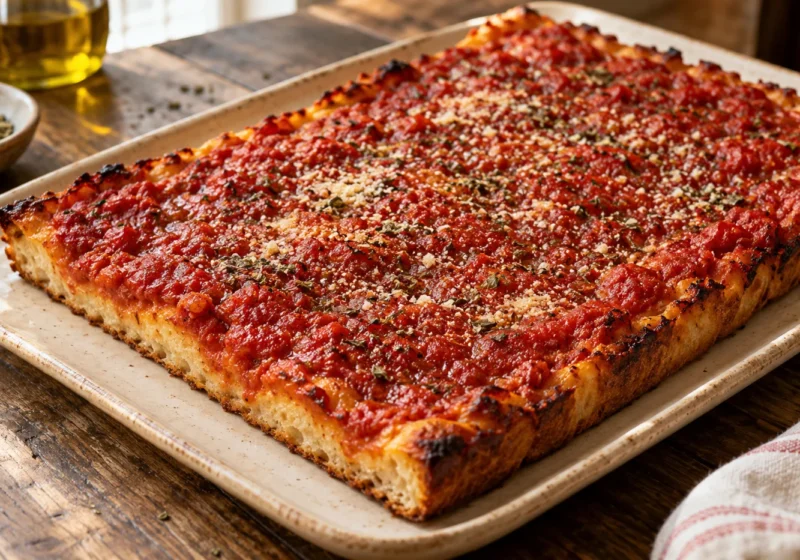
The finished sauce should coat a spoon without leaving a watery ring. That matters more in a sandwich than in a bowl of pasta. Reserve extra sauce for dipping instead of soaking the roll. For another pan-baked deli favorite, serve smaller portions of Sicilian-style sheet-pan pizza on a shared platter.
Variations and shopping notes
A mixture of beef and pork works if the combined weight stays one pound; cook ground-meat mixtures to the appropriate safe endpoint. For ground chicken or turkey, use 165°F/74°C and expect a different texture. Choose rolls with a tender interior and a resilient crust. The standard recipe contains wheat, milk and egg; deli rolls and packaged breadcrumbs may list additional allergens.
Store the filling separately
Keep extra rolls dry and refrigerate the meatballs and sauce promptly in a shallow container. Use refrigerated leftovers within three to four days and reheat to 165°F/74°C before assembling fresh sandwiches. Freeze the filling in meal-size portions. Avoid freezing fully assembled hoagies, because the sauce tends to soak the bread during thawing.
Frequently asked questions
Do I need to brown the meatballs first? No. Gently cooking them directly in sauce creates a tender result and keeps the method simple. Browning is an optional flavor change, but it adds a separate step and does not replace checking the internal temperature.
Can I make a smaller meal from this filling? Serve two meatballs in a short roll with a bowl of spinach tortellini soup. You can also spoon the filling over cooked pasta. In either case, use only enough sauce to coat the serving and keep the rest warm for anyone who wants more.