Hummus without tahini is a useful option when the sesame paste jar is empty or its strong flavor is not what you want. This version blends chickpeas with lemon, garlic, olive oil and cold water. It is an adaptation rather than a claim that tahini is unimportant in traditional hummus; the finished dip has a lighter chickpea-forward character.
Canned chickpeas make the method convenient, while a brief additional simmer softens them enough to blend smoothly. You do not need to peel every chickpea or add a complicated collection of substitutes. The recipe makes about one and a half cups, enough for four to six snack portions or several sandwiches.
Ingredients
- 1 can chickpeas, 15 ounces, drained and rinsed
- 2 tablespoons fresh lemon juice
- 1 small garlic clove, roughly chopped
- 2 tablespoons extra-virgin olive oil, plus 1 teaspoon for serving if desired
- 1/2 teaspoon ground cumin
- 1/4 teaspoon fine salt, plus more to taste
- 2 to 4 tablespoons cold water
- 1/4 teaspoon sweet paprika, optional
Method
- Place the drained chickpeas in a small saucepan and cover with fresh water by about an inch. Bring to a simmer and cook for 10 minutes, until a chickpea crushes very easily between a spoon and the side of the pan.
- Drain well and let steam escape for 5 minutes. Reserve a few whole chickpeas for serving if desired. Place the rest in a food processor with lemon juice, garlic, cumin, salt and 2 tablespoons cold water.
- Process for about 1 minute, scrape down the bowl and process again until the chickpeas form a thick paste. With the machine running, pour in the 2 tablespoons olive oil slowly so it disperses through the mixture.
- Add more cold water one teaspoon at a time, using up to the remaining 2 tablespoons, until the dip looks smooth and falls softly from a spoon. Stop and scrape the bowl as needed; different machines need different amounts of liquid.
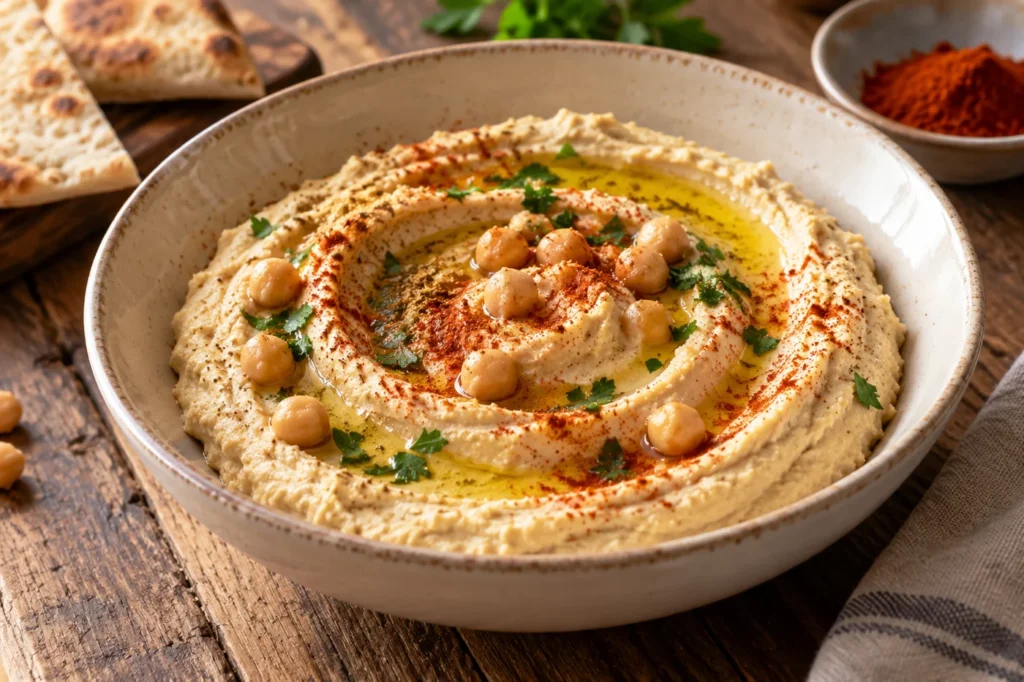
- Taste, then adjust salt or add a few drops of lemon juice. Transfer to a shallow bowl and draw a spoon through the surface to make a small well. Add the reserved chickpeas, optional paprika and optional teaspoon olive oil.
- Serve promptly, or cover and refrigerate until needed. If chilled hummus becomes very firm, stir in a teaspoon of cold water before serving rather than adding a large extra splash of oil.
What changes when you leave out tahini
Tahini contributes nuttiness, richness and a distinctive flavor, so a version without it will taste different. Extra olive oil cannot reproduce sesame exactly, and pouring in too much can leave the dip heavy. This recipe uses a moderate quantity of oil and lets soft chickpeas provide most of the body. Cumin adds warmth without trying to imitate tahini.
If you want a stronger toasted note, add a little smoked paprika at serving time, but keep it separate from the initial blend so you can taste the base first. Peanut butter and other nut butters create a different dip and introduce additional allergens. They are not necessary for a smooth texture, which comes primarily from softened chickpeas, adequate processing and enough water.
Give the blender an easier job
A food processor handles this relatively thick mixture more comfortably than some upright blenders. If using a blender, start with the lemon juice and measured water near the blades, then add chickpeas. Stop the machine before scraping, and follow its instructions for thick mixtures. Do not push a spoon toward moving blades or keep running a motor that is clearly struggling.
Warm, softened chickpeas break down more readily than firm chilled ones. The five-minute steam-off period makes them manageable without leaving them on the counter for an extended time. If a few skins remain visible, continue processing before adding much more liquid. A slightly textured homemade dip is still enjoyable; thinning it excessively just to chase complete smoothness can make it harder to spread.
Season gradually and build a useful plate
Taste a small spoonful with the bread or vegetables you plan to serve. Salted crackers need a different balance from raw carrot sticks. Lemon brings brightness, but too much makes the dip taste sharp before the chickpea flavor arrives. Add lemon in drops near the end, and give the mixture another quick stir before judging it.
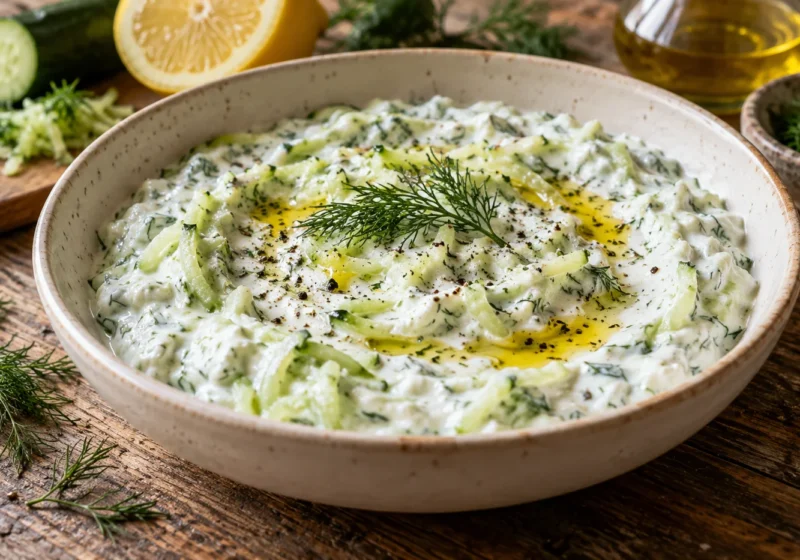
For a simple lunch, serve with sliced cucumber and a small portion of tomato butter bean skillet. A contrasting spoonful of homemade tzatziki works on a shared dip plate. Keep separate serving spoons for each. Although this recipe omits sesame, check chickpea, spice and oil labels and avoid claiming it is suitable for an allergy without checking cross-contact.
Storage and make-ahead notes
Refrigerate promptly in a covered container and use within three to four days. Keep a clean spoon for serving. Portion a small amount into the table bowl and leave the rest chilled rather than repeatedly warming the whole batch. You can freeze small portions for later use, though the texture may need a vigorous stir and a teaspoon of water after refrigerator thawing.
Frequently asked questions
Can I skip the simmering step? Yes, if your canned chickpeas are already very soft and you do not mind a slightly coarser texture. Drain and rinse them as usual, then process thoroughly. Start with the measured water and add extra cautiously; firm chickpeas do not become smoother simply because the dip is made thinner.
Can I use home-cooked chickpeas? Use about one and a half cups cooked, drained chickpeas in place of the can. They should be soft enough to squash easily. Season more carefully if they were cooked without salt, and use safe refrigerated or freshly cooked chickpeas rather than a batch of uncertain age.