
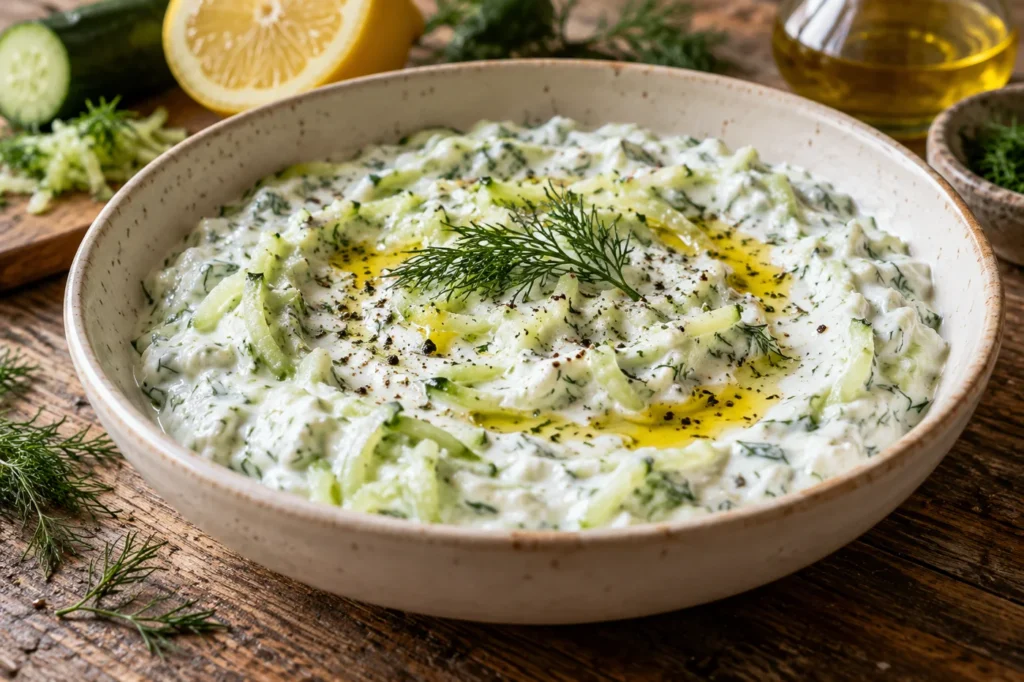
Homemade tzatziki should be cool, tangy and thick enough to sit on a spoon. The ingredients are simple, but cucumber brings enough water to loosen a bowl of yogurt if it is not handled first. This version uses plain Greek yogurt, grated cucumber, dill and a measured amount of garlic.
It makes about two cups, enough for six to eight small servings as a dip or sandwich sauce. A short refrigerator rest brings the flavors together, but the first decision happens before mixing: choose a yogurt you enjoy plain. Thin yogurt cannot be made reliably thick simply by adding more cucumber or lemon.
Ingredients
- 1 medium cucumber, about 8 ounces
- 1 1/2 cups plain Greek yogurt, preferably whole-milk
- 1 small garlic clove, finely grated
- 1 tablespoon fresh lemon juice
- 1 tablespoon extra-virgin olive oil
- 2 tablespoons finely chopped fresh dill
- 1/4 teaspoon fine salt
- 1/8 teaspoon freshly ground black pepper
Method
- Wash the cucumber and trim the ends. Peel it in alternating strips if the skin is tough. Halve lengthwise and scrape out a watery seed channel with a spoon; a firm, nearly seedless cucumber can simply be grated.
- Grate the cucumber on the coarse holes of a box grater. Gather it in a clean kitchen towel or several sturdy paper towels and squeeze firmly over the sink. Unfold, move the cucumber to a dry area of the towel and squeeze again.
- Stir the yogurt, garlic, lemon juice, olive oil, salt and black pepper together in a bowl. Mix until smooth, scraping the sides so the garlic does not remain in one concentrated streak.
- Fold in the squeezed cucumber and chopped dill. Taste a small spoonful. The garlic will become more noticeable during resting, so resist adding an extra clove immediately.
- Cover and refrigerate for at least 20 minutes. Stir once before serving and taste again. If needed, add a few drops more lemon or a small pinch of salt, remembering that the food served with the dip may already be seasoned.
- Spoon into a clean serving bowl. Keep the main batch refrigerated while serving small portions. Use a clean spoon each time rather than returning a utensil that has touched other food to the storage container.
Remove cucumber water before it reaches the yogurt
A coarse grate gives pleasant texture and is easier to squeeze than very fine cucumber pulp. Do not blend the cucumber into liquid. Squeeze until the handful feels damp rather than dripping. The exact amount you end up with varies because cucumbers hold different amounts of water; for this recipe, a loosely packed half cup of squeezed shreds is a useful guide.
Removing a large seed channel is especially helpful with a mature garden cucumber. A smaller, firm-skinned cucumber may not need that step. Taste a tiny piece of the skin before keeping it all: very thick or bitter skin can distract from the yogurt. If your towel smells of strongly fragranced detergent, choose an unfragranced clean cloth instead so that scent does not transfer.
Choose yogurt and manage the garlic
Whole-milk Greek yogurt gives a rounded flavor and a substantial texture. A thick lower-fat Greek yogurt also works, though it may taste tangier. If you only have plain unstrained yogurt, strain it in the refrigerator until thick before measuring. Keep it over a bowl in a fine sieve lined with suitable cloth, and account for that extra preparation time.
Fresh garlic becomes assertive surprisingly quickly in a small bowl of sauce. Start with one small clove, grate it finely and distribute it through the yogurt before adding cucumber. A large chopped piece can produce a harsh bite. If you are especially sensitive to raw garlic, use half a clove initially and let the sauce rest before deciding on more.
Flavor changes and ways to serve it
Mint can replace some dill, but choose one herb to lead rather than adding every soft herb in the refrigerator. A little lemon zest adds aroma without much extra liquid. Olive oil rounds the acidity, while salt brings out the cucumber. Avoid adding water to loosen a thick dip until it has rested; the cucumber may still release a little moisture.
Serve alongside crispy oven potato wedges, or add a spoonful beside lemon herb dense bean salad. For sandwiches, spread a thin layer and keep the remaining filling dry. The yogurt contains milk; check plant-based substitutes individually for allergens and texture rather than assuming they behave like strained dairy yogurt.
Storage and serving safely
Refrigerate promptly in a covered container at 40°F/4°C or colder and aim to use within three days. Follow an earlier yogurt use-by instruction if applicable. A little separation can be stirred back in; discard dip with spoilage signs. Freezing is possible, but thawed cucumber and yogurt often separate, so a fresh small batch gives a better texture.
Frequently asked questions
Can I make it the night before? Yes. Keep it covered in the refrigerator and adjust the seasoning after stirring the next day. The garlic will be stronger and the cucumber may release a little more liquid. For the thickest result, be particularly thorough with squeezing and avoid adding extra lemon before the overnight rest.
Can I rescue a watery batch? If only a small puddle has collected, spoon it off and stir gently. For a very loose dip, add a little more thick Greek yogurt rather than more cucumber. Straining an already mixed dip can remove some seasoning along with liquid, so taste again afterward. Next time, address the cucumber moisture before combining ingredients.