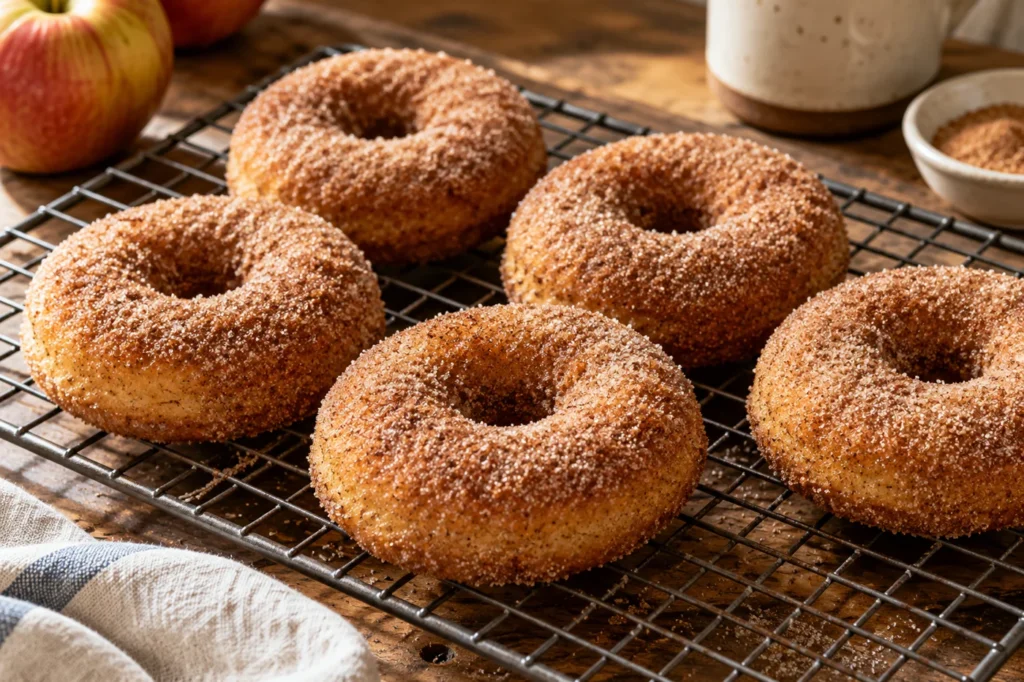
Baked apple cider donuts bring the aroma of an orchard stand into a home kitchen without a pot of frying oil. The texture is a tender little cake rather than a fried yeast doughnut, with cinnamon around the edges and apple in the background. Reducing the cider first concentrates its flavor without adding too much liquid to the batter.
This recipe makes six standard baked donuts, so it suits a weekend breakfast or a small afternoon coffee break. You will need a six-cavity donut pan and a small saucepan. The cider reduction needs time to cool before mixing with the egg; use those minutes to measure the dry ingredients and prepare the pan. Warm reduction can melt the butter unevenly or begin cooking the egg.
Cider, juice, and the right consistency
Use nonalcoholic apple cider, often sold as cloudy, unfiltered apple juice. Hard cider is not the same ingredient. Clear apple juice can work, but the apple flavor is usually lighter. Pour the cider into a small saucepan and reduce it gently, checking the volume rather than guessing by color. A wider pan reduces faster, so do not walk away.
You need 1/3 cup after reducing. If you accidentally go below that amount, add a little water to bring it back to the measured volume. The reduction should still pour easily; a sticky syrup makes the batter harder to balance. Let it cool to lukewarm or cooler before combining the wet ingredients.
Ingredients
- 3/4 cup (180 ml) nonalcoholic apple cider, reduced to 1/3 cup (80 ml)
- 1 cup (125 g) all-purpose flour
- 1 teaspoon baking powder
- 1/4 teaspoon baking soda
- 1/2 teaspoon ground cinnamon
- 1/4 teaspoon ground nutmeg
- 1/4 teaspoon fine salt
- 1 large egg
- 1/3 cup (65 g) light brown sugar
- 3 tablespoons (45 g) unsalted butter, melted and cooled
- 2 tablespoons plain yogurt
- 1/2 teaspoon vanilla extract
- For coating: 1 tablespoon melted butter, 3 tablespoons granulated sugar, and 1/2 teaspoon cinnamon
Method
- Simmer the cider in a small saucepan for about 10–15 minutes until reduced to 1/3 cup. Measure it in a heatproof jug, adjust with water if needed, and let cool for about 15 minutes.
- Heat the oven to 350°F/175°C. Grease a six-cavity standard donut pan. Whisk flour, baking powder, baking soda, cinnamon, nutmeg, and salt in a bowl.
- In another bowl, whisk egg, brown sugar, 3 tablespoons melted butter, yogurt, vanilla, and the cooled cider reduction until combined.
- Fold the wet mixture into the dry ingredients just until no dry flour remains. Spoon or pipe the batter into the pan, filling each cavity about three-quarters full.
- Bake for 11–14 minutes until the tops spring back lightly and a toothpick inserted in the thickest part comes out without wet batter. Rest in the pan for 5 minutes, then turn onto a rack.
- Mix the coating sugar and cinnamon. Lightly brush the warm donuts with the remaining tablespoon of melted butter and dip into the cinnamon sugar. Cool for another 10 minutes before serving.
A tender crumb needs a light hand
Once flour meets the wet ingredients, mix only until the batter comes together. Vigorous stirring develops a firmer texture and can create long tunnels inside the donuts. A few small lumps are fine if no dry flour remains. Use a flexible spatula to scrape the bottom of the bowl so flour does not hide underneath the batter.
Piping from a food-safe bag can be tidier than spooning, but either method works. Do not overfill the cavities to use every last spoonful. Batter that rises over the center posts closes the holes and can make the donuts difficult to release. If you have a little extra, bake it separately in a greased mini muffin cup.
When to coat and serve
The donuts should be warm when brushed, so the cinnamon sugar adheres, but not so hot that they fall apart. A thin coating of butter is enough. Saturating the crumb makes the outside greasy and uses more sugar to cover it. Set a plate under the rack to catch crumbs and keep the counter tidy.
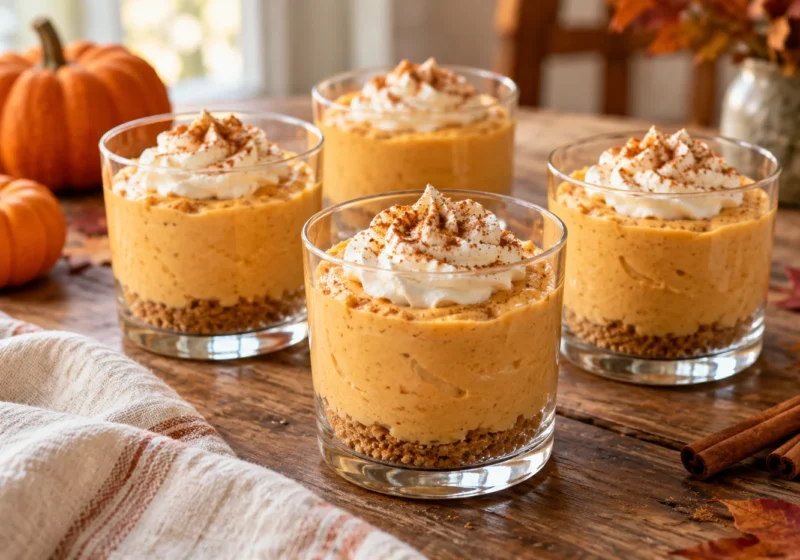
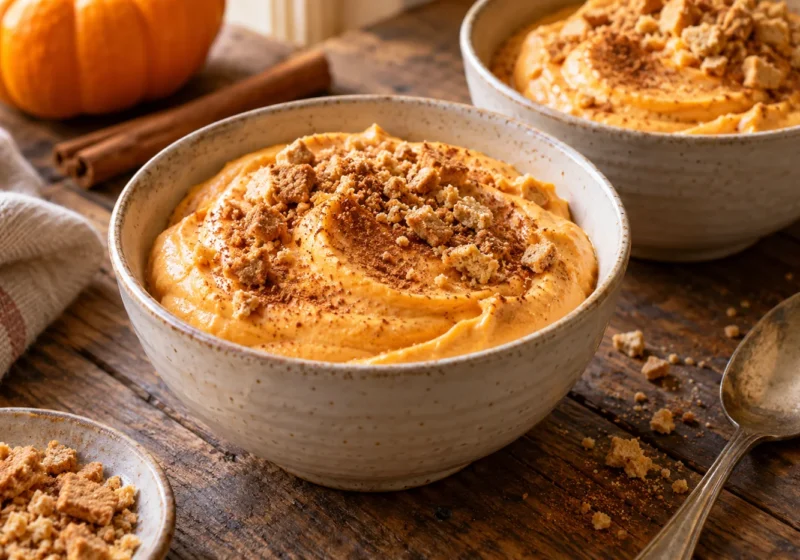
Serve with cold brew coffee diluted to your preferred strength. For a pumpkin-themed breakfast table, a small serving of pumpkin cottage cheese mousse offers a cool contrast to the spiced cake. Keep those additions modest so the donuts remain the main treat.
Substitutions and storage
Plain Greek yogurt works if loosened with a teaspoon of water; sour cream is another option. Avoid adding raw grated apple without adjusting the recipe, because its moisture can change the crumb. This recipe contains wheat, egg, and milk. A cup-for-cup gluten-free flour blend may behave differently, so it should be treated as a separate variation rather than a guaranteed equivalent.
For the freshest texture, eat the donuts on the day they are baked. Store fully cooled donuts in an airtight container at room temperature for up to 2 days in a cool kitchen. For longer storage, freeze them uncoated, then thaw and warm gently before brushing and sugaring. The coating softens as it sits, especially in humid weather.
Can I bake these as muffins?
Yes. Divide the batter between six greased or lined standard muffin cups, keeping the fill level around three-quarters. Begin checking at 15 minutes; deeper batter usually needs longer than a donut cavity. Use the same toothpick cue rather than assuming the donut timing applies.
Why is the apple flavor subtle?
Baked cider donuts are gently apple-flavored, not filled with an apple-pie center. Reducing the cider and measuring accurately helps. Extra cider in the batter weakens the structure; a stronger reduction is a better route than simply increasing the liquid.