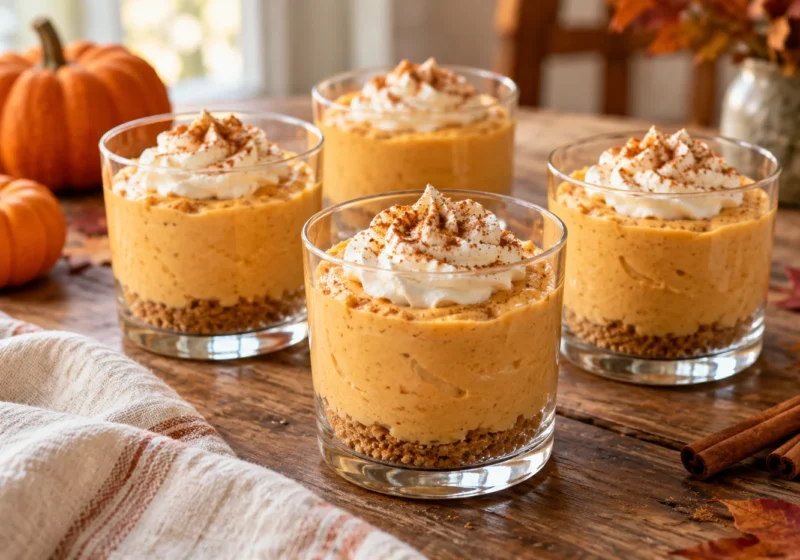
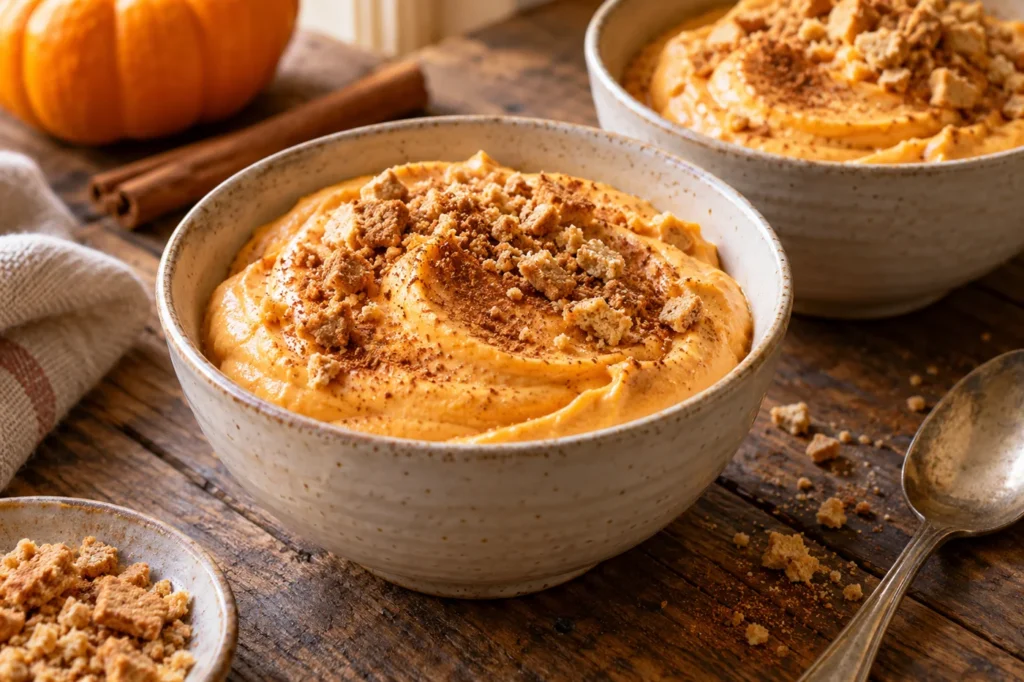
Pumpkin cottage cheese mousse is a cool, spoonable dessert with the flavor of pumpkin pie filling and a much shorter ingredient list. Cottage cheese supplies the creamy base, pumpkin adds body, and maple syrup softens the tang. A blender does the work; there is no gelatin, whipped topping, or oven involved. Expect a thick pudding texture rather than an airy chocolate-style mousse.
The important detail is the pumpkin. Choose plain canned pumpkin puree, not pumpkin pie filling, which already contains sugar and seasoning. Different brands vary in moisture. Start with the quantities below and judge the mixture after chilling rather than thinning it immediately. The dessert becomes firmer as it rests, making it useful for a small autumn lunch or an easy finish to dinner.
What makes the texture work
Full-fat cottage cheese usually gives the roundest flavor, although a lower-fat version also blends. Small-curd and large-curd varieties both work if your blender can process them thoroughly. A narrow blender jar or mini food processor is helpful for this small quantity. In a very large jar, stop often and scrape the mixture toward the blades instead of adding enough liquid to make it runny.
A pinch of salt matters even when the cottage cheese already tastes salty. Pumpkin is mild, so cinnamon, vanilla, and maple need a little contrast. Taste before adding the optional extra syrup; a crunchy topping will also bring sweetness.
Ingredients
- 1 cup (225 g) cottage cheese, preferably full-fat
- 1/2 cup (120 g) plain pumpkin puree
- 2 tablespoons maple syrup, plus 1 teaspoon if needed
- 1/2 teaspoon ground cinnamon
- 1/4 teaspoon ground ginger
- 1/2 teaspoon vanilla extract
- 1 small pinch fine salt
- 2 tablespoons crushed graham crackers, for serving
Method
- Add the cottage cheese, pumpkin puree, 2 tablespoons maple syrup, cinnamon, ginger, vanilla, and salt to a blender or small food processor. Keep the graham crackers aside.
- Blend for 45 seconds, scrape the sides, then blend for another 30–60 seconds until the mixture looks smooth. Rub a little between your fingers to check that the curds have disappeared.
- Taste and add the optional teaspoon of maple syrup if you want a sweeter finish. Blend briefly again; avoid adding milk unless the machine cannot process the mixture.
- Divide between two small glasses. Cover and refrigerate for at least 1 hour so the texture can settle and the spices can distribute.
- Scatter the crushed graham crackers over each portion immediately before serving. Serve cold with a spoon, keeping any remaining mousse covered in the refrigerator.
Fixing a grainy or loose mousse
Graininess usually means the cottage cheese needs more blending. Pause, scrape, and give the blades time to process the curds. A food processor may leave a little more texture than a high-speed blender. That difference is cosmetic; do not keep adding syrup or milk in an attempt to smooth it. Liquid helps circulation but can turn a thick dessert into a drink.
If the puree seems watery when you open the can, stir it first. For an especially loose brand, blot the measured puree on a folded paper towel for a minute before blending. If the finished mixture is already thin, chill it fully and serve it as pumpkin pudding. Adding a large amount of dry spice will not thicken it pleasantly and can make the dessert taste dusty.
Swaps and serving ideas
Honey can replace maple syrup, but start with a little less because its sweetness and flavor vary. Use pumpkin pie spice in place of the cinnamon and ginger if that is what you have: begin with 1/2 teaspoon, then taste. A dairy-free cheese substitute will behave differently and is not a direct equivalent here.
For a breakfast-style serving, top the mousse with toasted oats and chopped apple. For dessert, try grated dark chocolate or a few roasted pecans. Keep the portion modest because the mixture is rich and dense. This recipe contains milk; graham crackers commonly contain wheat, and optional nuts add another allergen. Check individual packages if cooking for someone with dietary restrictions.
For another chilled pumpkin dessert with a different base, try no-bake pumpkin cheesecake cups. A small glass of diluted cold brew concentrate also makes a pleasantly bitter partner to the sweet mousse.
Make-ahead and storage
Cover the plain mousse and refrigerate it at 40°F/4°C or colder for up to 3 days, using clean utensils each time. Add crumbs only when you are ready to eat; they soften quickly against the moist filling. Freezing can make the cottage cheese separate after thawing, so this is best treated as a refrigerator dessert rather than a freezer project.
Can I make it without a blender?
You can stir the ingredients together, but the cottage cheese curds will remain. For a smoother hand-mixed version, press the cheese through a fine sieve first. The result takes more effort and still has a slightly different texture, so describe it as a pumpkin cottage cheese bowl rather than expecting a completely smooth mousse.
Can I use homemade pumpkin puree?
Yes, if it is cooked, cooled, and thick enough to mound on a spoon. Roasted pumpkin puree is often less watery than boiled pumpkin. Drain loose puree before measuring, and keep the seasoning flexible because fresh pumpkin can taste milder than canned. Use the same chilling time and storage approach.