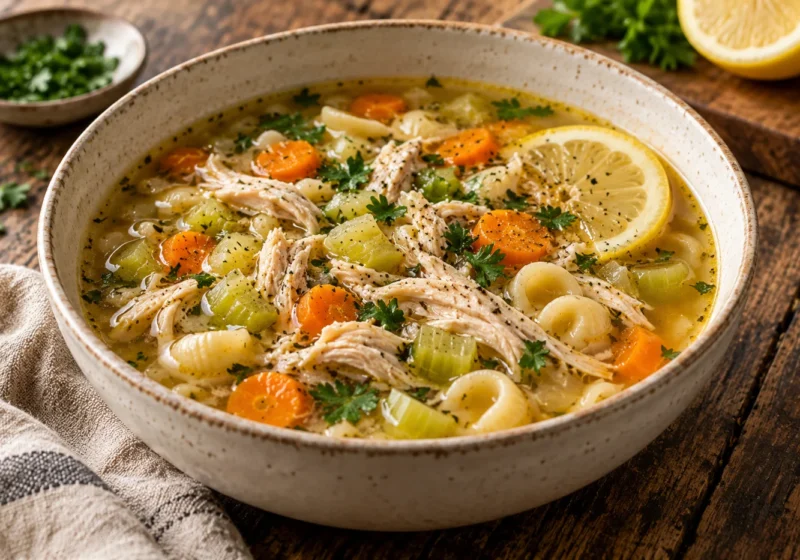

Broccoli cheddar soup brings two different jobs into the same pot: the broccoli needs enough heat to become tender, while the cheese needs a gentle finish. Get that order right and a smooth soup becomes much easier. This recipe uses a small flour-and-butter base to give the milk some support, then folds in freshly grated cheddar after the vegetables are cooked. The result is a substantial lunch soup with visible pieces of broccoli, not a cheese dip that happens to contain a few green flecks.
The texture to aim for
Choose a block of medium or sharp cheddar that you enjoy eating by itself. Extremely aged cheese brings plenty of flavor but can be harder to melt smoothly, while pre-shredded cheese may contain coatings that change the texture. Cut the broccoli florets into bite-size pieces and peel the tough exterior from the stalk before dicing its tender center. Using both parts provides a more interesting spoonful and reduces trimming waste. The finished soup should lightly coat the spoon while still pouring freely; it will thicken a little as it stands.
Ingredients
- 3 tablespoons unsalted butter
- 1 small onion, finely diced
- 1 small carrot, finely diced
- 2 garlic cloves, minced
- 3 tablespoons all-purpose flour
- 2 cups (480 ml) low-sodium vegetable broth
- 2 cups (480 ml) whole milk
- 4 cups (300 g) small broccoli florets and peeled diced stalk
- 1/2 teaspoon Dijon mustard
- 1/2 teaspoon fine salt, plus more to taste
- 1/4 teaspoon ground black pepper
- 6 ounces (170 g) cheddar cheese, freshly grated
Method
- Melt the butter in a heavy saucepan over medium heat. Add the onion and carrot and cook for 6 minutes, stirring, until softened without browning. Add the garlic and cook for 30 seconds.
- Sprinkle in the flour. Stir continuously for 1 minute to make a pale paste that coats the vegetables. Gradually pour in the broth, stirring after each addition until no dry flour remains.
- Add the milk, broccoli, mustard, salt and pepper. Bring just to a gentle simmer, then reduce the heat. Cook uncovered for 12 to 15 minutes, stirring frequently, until the broccoli stalk pieces are tender.
- For a thicker vegetable base, mash a few florets against the side of the pan. Turn off the heat and wait for active bubbling to stop before adding any cheese.
- Add the grated cheddar in three additions, stirring each one gently until melted before adding the next. Taste the soup and adjust the salt only after the cheese is incorporated.
- Serve immediately. If the soup has become too thick, stir in a little warm milk or water until it returns to a spoonable consistency.
Swaps and variations
Frozen broccoli works when fresh is unavailable. Add it directly from frozen and judge doneness from the thickest stem rather than the clock; excess ice may make the soup thinner. Replace a quarter of the cheddar with Monterey Jack for a milder bowl. A pinch of dry mustard can replace Dijon, though it has a different intensity. This recipe contains milk and wheat; Dijon can contain mustard allergens. A plant-based milk and cheese combination needs its own testing, because those products melt and thicken differently, so it is not a guaranteed one-for-one substitution.
Troubleshooting
A sandy or oily surface usually means the cheese was exposed to too much heat or added too quickly. Stop heating immediately and gently stir in a small splash of warm milk; this may improve a lightly split sauce but cannot reliably undo a severe split. If the soup tastes floury, the base needed more cooking before the cheese went in. If it is thin, mash more broccoli rather than adding dry flour directly. Large broccoli chunks can stay firm while the florets disintegrate, which is why an even cut matters more than an exact simmering minute.
Storing and serving leftovers
Cool leftovers in shallow containers and refrigerate promptly at 40°F/4°C or below. Use within three to four days. Reheat a small portion gently, stirring often, until it reaches 165°F/74°C; a spoonful of water can loosen it while it warms. Freezing is possible, but the milk-and-cheese texture may separate after thawing. For a meal you intend to freeze, make the vegetable-and-broth base separately and add the milk, thickener and cheese when completing the soup.
Frequently asked questions
Should I use the blender? It is optional. Blend only part of the vegetable base before adding cheese if you want a smoother soup. A completely blended bowl loses the pleasing contrast between creamy broth and tender florets.
Can I double the batch? Use a larger heavy pot and keep the simmer gentle. The heating time will increase, but the cheese should still go in off the heat in small additions. Do not double the burner setting.
Make it a meal
A little sharpness is welcome beside this rich soup. Offer a small serving of lemon herb bean salad or slices of tomato with vinegar. For a cafe-style lunch, add some small-batch focaccia, or simply toast a thick slice of bread and rub it with a cut garlic clove. Keep the bread separate until serving to preserve its toasted edges.