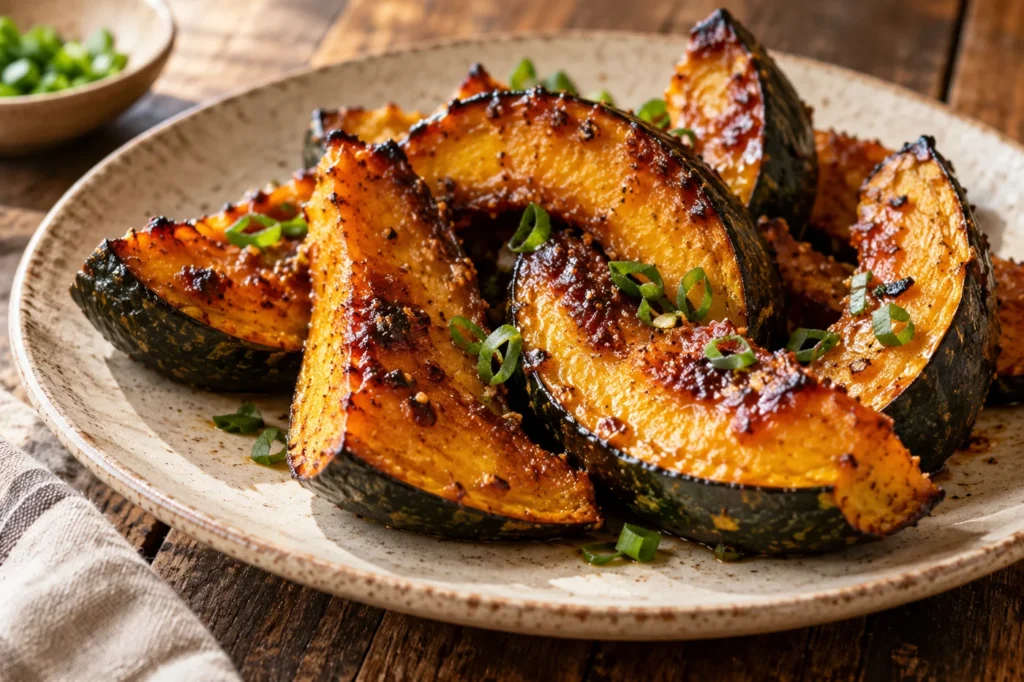
Roasted kabocha squash has a dense, chestnut-like texture that makes it satisfying as a side dish or the center of a simple meal. This version starts with a hot oven and finishes with a thin miso maple glaze. The squash does most of the work; the glaze adds salt, sweetness, and a small bright note from rice vinegar.
Kabocha varies in size and moisture, so the clock is only a guide. Look for flesh that yields easily to a knife and browned edges that look dry rather than watery. A pale wedge that is still firm in the middle needs more roasting, even if the suggested cooking time has passed.
Choosing and cutting the squash
Choose a squash that feels heavy for its size with firm skin and no soft or moldy patches. The green skin can be eaten when thoroughly cooked, although its thickness varies. If you prefer the flesh alone, scoop it from the skin at the table rather than struggling to peel the whole hard squash before roasting.
Use a stable cutting board and a sharp, substantial knife. Trim a thin slice from the base only if needed to prevent wobbling. Keep your free hand out of the blade’s path. If the squash is too hard to cut confidently, ask for it to be cut at the shop or choose pre-cut pieces; there is no prize for forcing a knife through an unstable vegetable.
Ingredients
- 1 small kabocha squash, about 2 pounds
- 1 tablespoon neutral oil
- 1/4 teaspoon fine salt
- 1 tablespoon white miso
- 1 tablespoon maple syrup
- 1 tablespoon warm water
- 1 teaspoon rice vinegar
- 1 teaspoon toasted sesame oil
- 1 teaspoon sesame seeds
- 1 scallion, thinly sliced
Method
- Heat the oven to 425°F (220°C). Scrub the squash, dry it thoroughly, halve it carefully, and scrape out the seeds. Cut into wedges about 3/4 inch thick.
- Toss the wedges with the neutral oil and salt. Arrange them on a large rimmed metal baking sheet with one cut side down, leaving space between pieces.
- Roast for 20 minutes. Turn the wedges, then roast for 10 to 15 minutes more, until a knife enters the flesh easily and the edges are browned.
- Whisk the miso, maple syrup, warm water, rice vinegar, and sesame oil in a small bowl. Brush lightly over the roasted wedges and return to the oven for 3 minutes, watching closely.
- Transfer to a serving plate, drizzle with any remaining glaze, and finish with sesame seeds and scallion. Serve warm.
Why the glaze goes on late
Maple syrup browns quickly, and miso can scorch before thick squash wedges become tender. Roasting with plain oil first gives the flesh time to cook. A brief glazed finish adds a shiny coating without a long exposure to high heat. Keep the final coating light; leftover glaze can be drizzled over the serving plate instead of pooled on the hot pan.
White miso is relatively mellow and works well here. Other miso pastes differ in saltiness and intensity, so taste your glaze before adding it. A darker miso may need a little extra water and less salt on the squash. Many miso products contain soy, and some contain barley or other grains. Sesame is also present in this recipe; check all labels for relevant allergens.
A heavy metal baking sheet encourages browning. Glass dishes and crowded pans hold more moisture around the wedges. If your squash will not fit in a single layer with visible gaps, use two pans and rotate their positions during roasting. Parchment makes cleanup easier, but use it only within the manufacturer’s temperature limit.
Make it a meal
Serve the wedges over rice with a spoonful of lemon herb dense bean salad on the side. The beans add texture and acidity against the rich squash. For a warm, all-vegetable spread, pair them with tomato butter beans and put the pan of beans on the table for sharing.
For a variation, replace the scallion with finely chopped parsley and use lemon juice in place of rice vinegar. Butternut squash can replace kabocha, peeled and cut into equally sized chunks, though its softer texture changes the result. Do not expect every squash variety to roast on exactly the same schedule; use tenderness and color as your guide.
Storage and reheating
Refrigerate leftover cooked squash promptly in a shallow covered container and use within three to four days. Reheat a portion in a moderate oven until hot throughout, checking for 165°F (74°C). The glazed edges soften in storage, so a toaster oven or conventional oven gives a better texture than a covered microwave bowl. Add fresh scallion after reheating.
Can I prepare the wedges ahead?
Yes. Wash, cut, and refrigerate the raw wedges in a covered container the day before cooking. Dry any surface moisture before adding oil. Mix the glaze separately and refrigerate it as well. This division of work is especially useful when the squash is part of a larger meal with several dishes competing for attention.
Why is the squash soft but not brown?
The pan may be overcrowded, the pieces may be wet, or the oven may be running cool. Turn the wedges onto a fresh cut side and give them more space. Avoid adding more glaze at this point; extra liquid encourages steaming. A few extra minutes on a roomy metal tray usually improves color without requiring a different recipe.