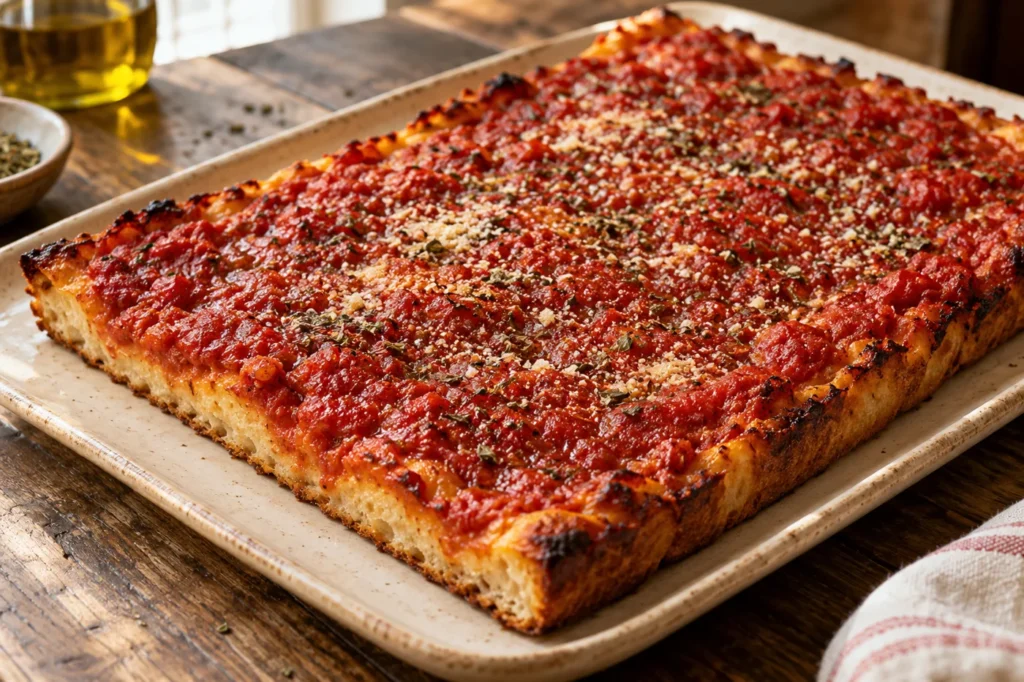
This tomato pie recipe puts the sauce first: a thick, tangy topping spread over a soft, olive-oil dough. It is a rectangular, pizza-like pie rather than the pastry-crust tomato pies found in other regional traditions. A little grated hard cheese is optional; the tomato flavor does most of the work.
The archived New Haven Cafe menu listed a square tomato pie and described its sauce as a secret recipe. No original formula was supplied in that archive, so this is an independent home version. It is designed for a 9 by 13-inch metal pan and tastes good warm or at a comfortable serving temperature, within safe holding limits.
Ingredients
- 350 grams bread flour
- 260 grams lukewarm water, about 95°F/35°C
- 4 grams instant yeast
- 7 grams fine salt for the dough
- 2 tablespoons olive oil for the dough
- 2 tablespoons olive oil for the pan
- 1 tablespoon olive oil for the sauce
- 2 garlic cloves, minced
- 1 can crushed tomatoes, 28 ounces
- 1 tablespoon tomato paste
- 1/2 teaspoon dried oregano
- 1/4 teaspoon fine salt for the sauce, plus more only if needed
- 2 tablespoons grated Parmesan or a similar hard cheese, optional
Method
- Stir the flour, water, yeast, dough salt and 2 tablespoons olive oil in a bowl until combined. Rest for 15 minutes, then fold the dough over itself several times with damp hands. Cover and let rise for 60 to 75 minutes, until roughly doubled.
- While the dough rises, warm 1 tablespoon olive oil in a saucepan. Add garlic and stir for 30 seconds. Add crushed tomatoes, tomato paste, oregano and sauce salt. Simmer uncovered for 25 to 35 minutes, stirring often, until thick enough to mound softly on a spoon.
- Cool the sauce in a shallow bowl while the dough finishes rising. Oil the metal pan with the remaining 2 tablespoons oil. Transfer the dough to the pan, turn to coat and rest 15 minutes before gently pressing it outward.
- If the dough resists, wait another 10 minutes before stretching again. Let the filled pan proof for 25 to 35 minutes, until puffy. Heat the oven to 450°F/230°C with a rack in the lower third.
- Spread about 1 1/2 cups cooled sauce over the dough, leaving a small border. Refrigerate any extra sauce promptly for another meal. Bake for 23 to 28 minutes, until the crust edges and underside are golden and the center is set.
- Rest in the pan for 5 minutes, then transfer carefully to a rack. Sprinkle with optional cheese and cool another 10 minutes before cutting. Serve warm, or let individual pieces cool briefly on a rack rather than trapping steam in the pan.
Why reducing the sauce matters
Raw or thin tomato sauce can leave a gummy layer where it meets the dough. Reducing it separately gives you control before baking begins. Use a saucepan wide enough for evaporation, and lower the heat if the sauce spits aggressively. Scrape the bottom regularly so the tomato paste does not catch. The sauce will thicken a little more as it cools.
Different cans of tomatoes vary in water content and acidity, so the stated simmering time is a range. Taste near the end rather than seasoning heavily at the beginning. If the tomatoes are unusually tart, add a small splash of olive oil and taste again. The aim is a concentrated, savory sauce, not something sweet enough to resemble ketchup.
Dough and pan pointers
The dough is intentionally soft. A few rests do more useful work than repeatedly forcing it into the corners. If you tear a thin spot, pinch the edges together gently and stop stretching for a few minutes. Add only a dusting of flour to your hands if necessary; working large amounts into the dough changes its texture.
A metal pan gives a more reliable browned underside than a thick ceramic casserole. Begin checking early with a dark pan. If you want a cheese-topped variation, follow the separate Sicilian-style sheet-pan pizza recipe instead of burying this sauce-first pie under a heavy layer of mozzarella.
Serving, substitutions and allergens
Cut the pie into twelve small squares for sharing or six larger lunch portions. A crunchy green salad makes a useful contrast. For a wider deli-inspired table, serve alongside smaller pieces of an Italian zep-inspired sandwich. The dough contains wheat; the optional cheese contains milk. Check hard-cheese labels if a vegetarian preparation matters to you.
Storage and reheating
Refrigerate leftover pie promptly; use within three to four days and reheat leftovers to 165°F/74°C. Separate frozen pieces with parchment before packing. Warm pieces on a metal baking tray until the underside firms again. Keep the sauce in a separate container if making components ahead, and assemble only after the dough has finished its final proof.
Frequently asked questions
Can I use ready-made pizza dough? Yes, provided you use enough for this pan and allow it to relax before stretching. A dough formulated for very thin pizza may bake differently, so follow its handling advice and watch the underside closely. Do not assume every package has the same weight.
Why wait before slicing? A short rest lets excess steam escape and makes the soft crumb easier to cut neatly. Use a large sharp knife or pizza wheel, and avoid pressing the entire pie flat. The tomato layer should remain thick and glossy, with a distinct bread layer underneath.