
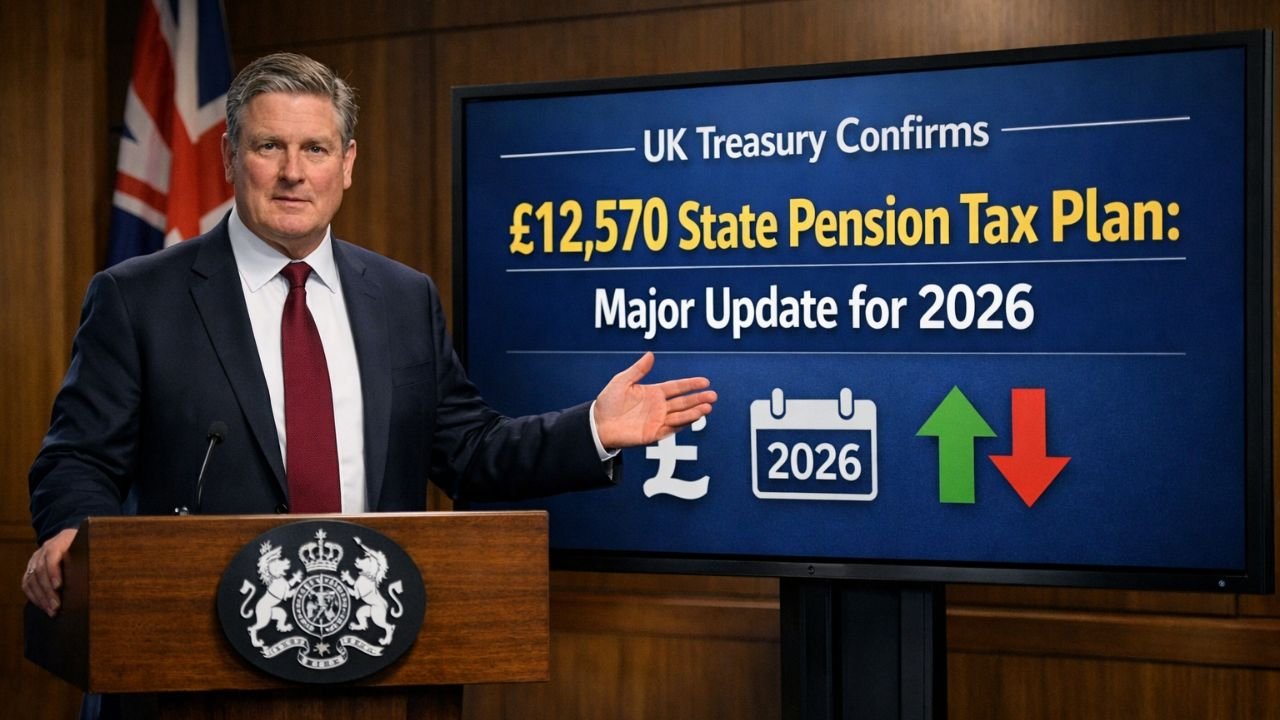
The UK Treasury has officially confirmed key details of the £12,570 State Pension tax plan, outlining how state pension income is treated for tax purposes and what changes pensioners should expect.
This development is especially significant as more retirees face the possibility of paying income tax on their state pension due to rising pension amounts and a frozen tax threshold.
In this detailed article, we explain all aspects of the plan, what it means, how it affects pensioners, and key facts and figures that everyone should understand.
What Is the £12,570 Tax Threshold?
The £12,570 figure refers to the current personal tax allowance in the UK. This is the amount of income an individual can receive in a tax year before they are liable to pay income tax. The personal tax allowance applies to all forms of taxable income, including:
- State Pension payments
- Private pension income
- Savings interest and other income sources
If a pensioner’s total income exceeds £12,570, the amount above that threshold becomes taxable. This means that state pension income may be taxed if it pushes total income beyond the tax‑free limit.
Why This Tax Plan Matters Now
Two major trends have made this tax plan especially important for retirees:
- State Pension amounts have increased several times through regular uprating, meaning many pensioners receive more yearly income.
- The personal tax allowance has been frozen at £12,570 for a number of years, while the cost of living and pension amounts continue to rise.
When pension income increases but the tax threshold does not, more retirees will find themselves paying income tax simply because their total income has risen above the tax‑free limit. This effect is known as fiscal drag.
How State Pension Taxation Works
It’s important for pensioners to understand the mechanics of state pension taxation:
- The State Pension is classed as taxable income.
- Tax is not automatically deducted at source when the Department for Work and Pensions pays the pension.
- Her Majesty’s Revenue and Customs (HMRC) adjusts tax codes or asks for self‑assessment tax returns if total income exceeds the personal allowance.
- Pensioners with other income sources may find their tax code changed to collect tax on excess income.
Key Facts and Figures
| Item | Detail / Value |
|---|---|
| Personal Tax Allowance | £12,570 per year |
| Full New State Pension Estimate | Around £12,500+ per year |
| State Pension Taxed? | Yes, if total income exceeds the allowance |
| Tax Collected Through | HMRC tax code adjustments or self assessment |
| Personal Allowance Status | Frozen at £12,570 |
| Risk for Pensioners | More may pay tax due to income rising faster than allowance |
Implications for Pensioners
The Treasury’s confirmation of this plan makes several points clear for those receiving state pension:
- If your total income (including state pension) stays under £12,570 per year, you will not pay income tax.
- If your total income exceeds £12,570, you could pay tax on the difference above that amount.
- With pensions rising but the allowance frozen, a growing number of pensioners may pay tax in years to come.
- Pensioners must check their total income, including other pensions, savings, rental income, or investment returns, to determine their tax liability.
- It’s also important to monitor tax codes issued by HMRC, as these determine whether tax is collected through pension payments or through other means.
Tips for Pensioners
Here are a few practical steps retirees should consider:
- Review your total income each tax year to see if you exceed the personal allowance.
- Keep track of your tax code and inform HMRC of any changes in income to avoid unexpected tax bills.
- Consider professional advice if you have multiple income sources or are unsure how taxation applies to your situation.
The confirmation of the £12,570 State Pension tax plan by the UK Treasury brings clarity and urgency for pensioners across the country. As pension amounts rise and the personal allowance stays the same, more retirees may find themselves liable for income tax on their state pension.
Being informed, reviewing total income, and checking tax codes are essential steps to avoid surprises and ensure financial stability in retirement.
FAQs
Is the State Pension tax‑free?
No. The State Pension is treated as taxable income if your total income for the year exceeds £12,570.
Why could more pensioners pay tax now?
Because state pension amounts are increasing while the personal tax allowance remains frozen at £12,570, more pensioners’ income may exceed the threshold.
How is tax collected on the State Pension?
Tax is not deducted automatically. HMRC adjusts tax codes or may require self‑assessment to collect any tax owed if total income goes above the personal allowance.