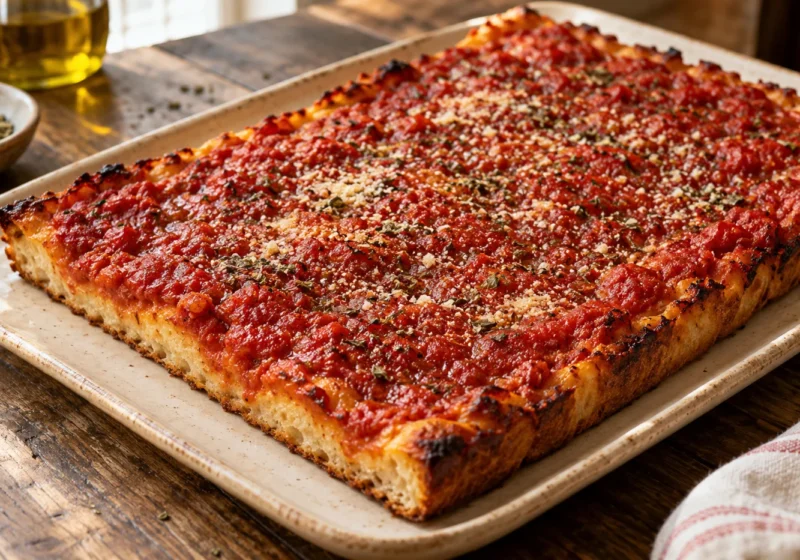

Sicilian style sheet pan pizza gives you a thick, airy base and enough surface area to share. This home-kitchen version uses a 9 by 13-inch metal pan, a simple yeast dough and a restrained layer of sauce. The key is giving the dough time to relax before stretching it toward the corners.
The archived New Haven Cafe menu featured Sicilian pizza, but the formula below is an independent interpretation rather than its original recipe. It aims for a tender crumb under a crisp, oil-bronzed bottom. Plan on about three hours overall, most of it unattended, and judge the dough by its rise instead of treating the clock as a guarantee.
Ingredients
- 400 grams bread flour, plus a little for handling
- 300 grams lukewarm water, about 95°F/35°C
- 4 grams instant yeast
- 8 grams fine salt
- 2 tablespoons olive oil for the dough
- 3 tablespoons olive oil for a 9 by 13-inch metal pan
- 3/4 cup thick crushed tomatoes
- 1/2 teaspoon dried oregano
- 8 ounces low-moisture mozzarella, shredded
- 2 tablespoons grated Parmesan
- 6 fresh basil leaves, optional
Method
- Mix the flour, water, yeast, salt and 2 tablespoons olive oil in a large bowl until no dry flour remains. Cover and rest for 15 minutes. With damp hands, lift and fold the dough over itself four times, rotating the bowl between folds.
- Cover and let rise for about 60 to 75 minutes in a comfortably warm place, until noticeably puffed and roughly doubled. Cooler kitchens need more time. Do not put the bowl directly against a heater or in a hot oven.
- Coat the metal pan with 3 tablespoons olive oil. Transfer the dough to the pan and turn it once to coat. Rest 15 minutes, gently press toward the corners, then rest another 15 minutes if it springs back. Never force resistant dough.
- Let the stretched dough rise uncovered or loosely covered for 25 to 35 minutes, until puffy. Meanwhile heat the oven to 475°F/245°C with a rack in the lower third. Mix the crushed tomatoes with oregano.
- Spoon the tomatoes gently over the dough, leaving a narrow border. Add mozzarella and Parmesan in an even layer. Bake for 20 to 25 minutes, rotating once if necessary, until the cheese bubbles and the base is deeply golden when lifted with a spatula.
- Leave the pizza in its pan for 5 minutes, then move it to a rack for another 5 minutes so steam can escape. Add basil if using, cut into squares and serve. Use the golden underside and set center as the final baking cues.
How the pan changes the result
A metal pan conducts heat more effectively than a thick glass dish, helping the bottom brown before the topping dries out. A dark pan may color faster, so begin checking a few minutes early. If your only pan is very thin, place it on a preheated baking sheet for steadier heat. Avoid an insulated cookie sheet underneath, which can slow browning.
The oil in the pan should form a continuous film rather than a puddle in one corner. Level the pan before adding dough. During baking, that oil helps the underside develop a delicate fried edge. Removing the pizza from the pan after its short rest matters too: trapped steam can soften an otherwise crisp base in minutes.
A relaxed dough is easier to stretch
This dough is deliberately wetter than a hand-shaped round pizza dough. It will feel sticky at first. Use lightly dampened fingertips and patient rests instead of adding handfuls of flour. Extra flour makes the crumb tighter and changes the planned water balance. The gentle fold builds enough structure without a long kneading session.
If you are new to yeast baking, the smaller loaf-pan focaccia uses a similarly forgiving approach. Both recipes reward watching for expansion and bubbles. A dough that still feels tight after resting may simply be cold; give it another ten minutes rather than pressing hard enough to tear it.
Keep toppings light and balanced
Choose low-moisture mozzarella rather than wet fresh mozzarella for this formula. Drain any watery canned tomatoes before measuring. Mushrooms, peppers or sausage should be cooked and drained separately before adding; this keeps excess moisture off the dough. Replace a little cheese with those toppings instead of piling on a heavy second layer. Wheat and milk are the principal allergens.
Storing the remaining squares
Refrigerate leftover pizza promptly and use within three to four days. Reheat leftovers to 165°F/74°C. Freeze cooled squares individually, then pack them together so you can remove only what you need. A skillet or hot oven restores the base more effectively than a microwave alone.
Frequently asked questions
Can the dough rise overnight? Yes. After mixing and folding, cover and refrigerate overnight. The next day, let it warm until pliable before transferring it to the pan. Final proofing will take longer from cold, and the total preparation time will extend beyond the same-day schedule.
What goes well alongside thick pizza? A crisp, lightly dressed salad gives contrast without more rich toppings. For a deli-style spread, cut the pizza into smaller squares and pair it with an Italian zep-inspired sandwich divided into tasting portions. Let the dough and sauce stay the focus rather than crowding the table with competing sauces.