
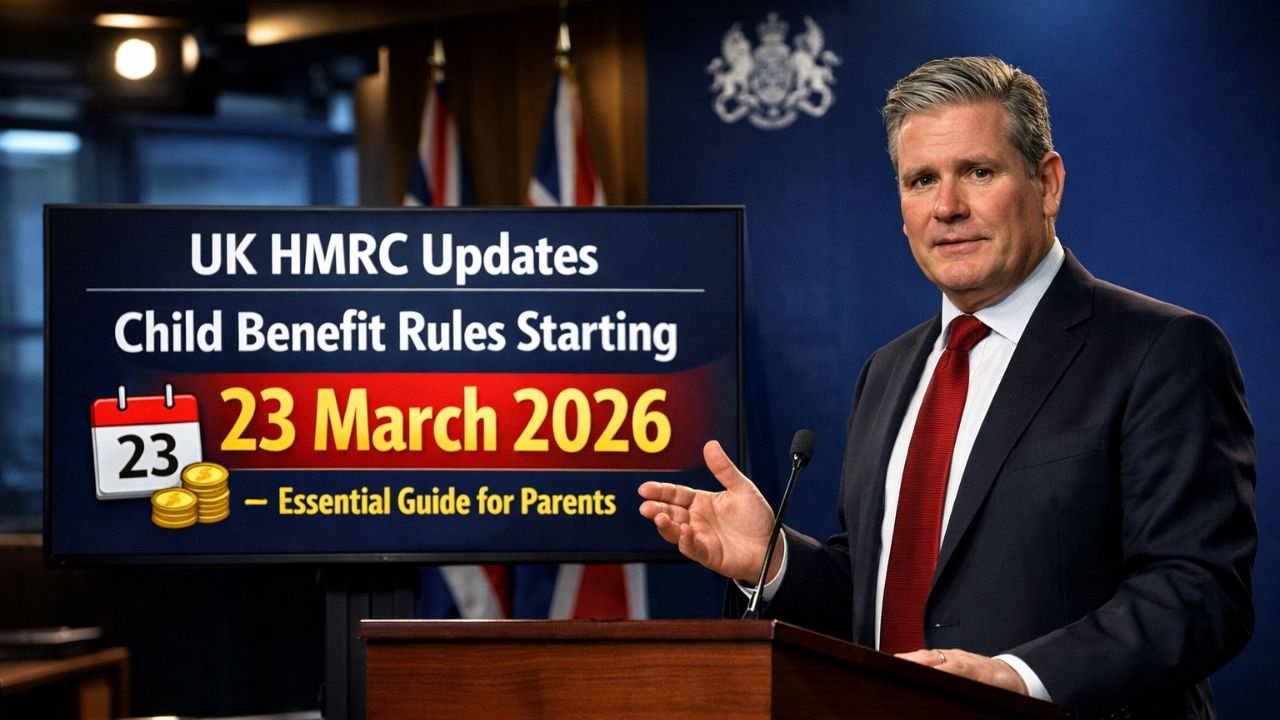
The UK government has announced important updates to Child Benefit rules, effective from 23 March 2026. These changes affect how families receive financial support for raising children and how high incomes may influence repayments.
It is crucial for parents and guardians to understand these updates to ensure they receive the correct benefit and avoid unexpected tax charges.
What Is Child Benefit?

Child Benefit is a tax-free payment provided to parents or guardians responsible for children. It helps with essential costs like food, clothing, school supplies, and childcare.
Payments are usually made every four weeks, although weekly payments are available in certain cases. Families with children under the age of 16—or under 20 if in approved education or training—can claim this benefit.
Why Are the Rules Changing?
The changes effective in March 2026 are intended to clarify eligibility, simplify reporting, and make the system fairer.

By adjusting income-related rules and improving communication, the government aims to reduce confusion for families while ensuring the Child Benefit system remains effective and transparent.
Key Changes From 23 March 2026
| Area | Old Rules | New Rules (From 23 March 2026) |
|---|---|---|
| Child Benefit Payments | £26.05/week for first child, £17.25 for additional children | £27.05/week for first child, £17.90/week for additional children |
| Income Threshold (HICBC) | Charge starts at £60,000, full repayment at £80,000 | Thresholds remain, but guidance on application is clarified |
| Eligibility Reporting | Parents must notify HMRC of income and education changes | Reporting made simpler with clearer instructions |
| Administration | Manual calculations and communication | Better integration with tax records and streamlined guidance |
New Child Benefit Rates
Starting April 2026, the weekly rates are updated to keep pace with living costs:
- £27.05 per week for the eldest or only child
- £17.90 per week for each additional child
Parents do not need to reapply for the updated rates; payments are applied automatically.
Understanding the High Income Child Benefit Charge (HICBC)

The HICBC applies if one parent’s income exceeds £60,000. Key points include:
- Repayment starts gradually at £60,000, increasing incrementally.
- Families must repay the full Child Benefit if income reaches £80,000.
- The 2026 updates clarify how HMRC calculates the charge and how parents should report income changes.
Who Will Be Affected?
- Families where one parent earns above £60,000
- Households with fluctuating incomes
- Parents previously unsure about reporting or repayments
Low- and middle-income families will largely see no changes to their payments.
Do Parents Need to Take Action?
Most parents do not need to act immediately. However, they should:
- Verify income levels regularly
- Update HMRC if income changes
- Understand how the HICBC might affect repayments
Staying informed ensures families receive the correct support without unexpected tax obligations.
The Child Benefit rule changes effective 23 March 2026 focus on clarity, fairness, and efficiency. While most families will continue to receive benefits as before, parents with higher incomes should understand the HICBC and reporting requirements.
Keeping HMRC informed about income and child status is key to receiving correct payments and avoiding repayment issues.
FAQs
What are the new Child Benefit rates in 2026?
Weekly payments will increase to £27.05 for the first child and £17.90 for additional children.
Who has to repay Child Benefit?
Parents earning above £60,000 per year may need to repay part or all of their Child Benefit through tax, with full repayment at £80,000.
Do I need to do anything for the new rules?
Most parents do not need to act immediately but should monitor income changes and report updates to HMRC if necessary.